Fountain grass (Pennisetum alopecuroides) or a closely related ornamental grass
Description
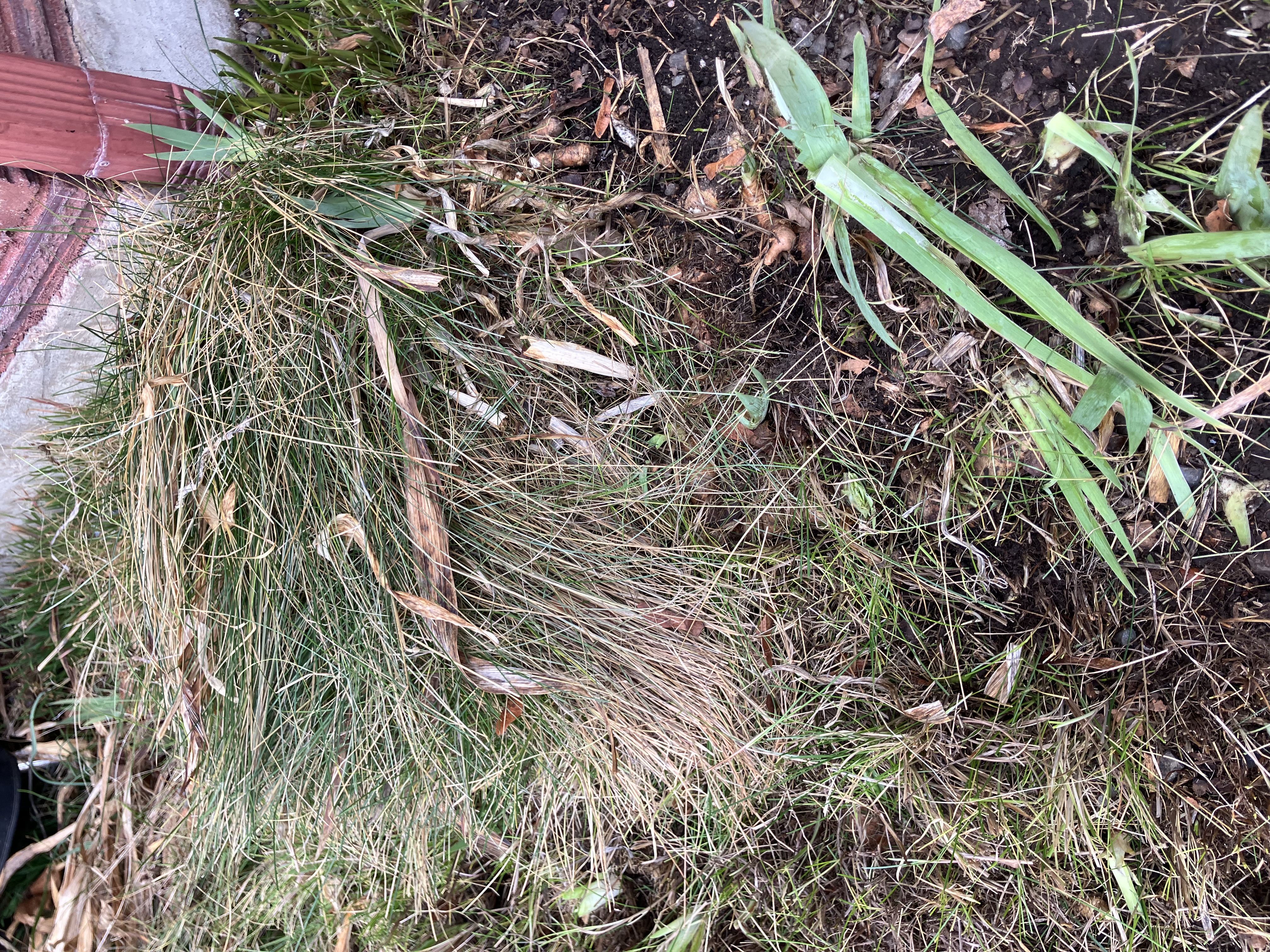
The plant in the photo appears to be a clump-forming ornamental grass, most consistent with fountain grass (Pennisetum alopecuroides) or a very similar bunchgrass. The mound is dense and sprawling, with a tangle of narrow, linear leaves that form a rounded tuft. In winter, the foliage often dries to tan or brown, giving the clump a weathered, hay-like appearance similar to what’s shown in the image. Although the exact species or cultivar is hard to confirm without flowering stems, the general habit—a broad, low, leafy mound with slender, arching leaves—fits fountain grass and related compact grasses well. Here is a detailed overview of its characteristics, care, and practical growing tips. Description and identifying features - Growth form: A clump-forming (bunching) grass that stays relatively compact and forms a dense tussock. The clump may become several feet wide and tall as it matures, depending on the cultivar and climate. - Leaves: Long, narrow, blade-like leaves that are typically 0.25–0.5 inches wide and can reach a foot or more in length in smaller forms, with arching or gracefully bending habit. In the photo, the leaves are green with some brown tips, consistent with seasonal die-back or drought/winter stress. - Foliage color: Lush green during the growing season; can turn brown-tan in winter or after drought. Some cultivars may have a slight blue-green cast. - Inflorescence: Fountain grasses usually produce short, airy plumes or seed heads that rise above the foliage in late summer to fall. In winter, the stems and plumes often fade to tan or straw color. If the plant hasn’t yet flowered in your season, the clump can look very similar to the photo—dense, wiry, and brownish as old foliage dries. - Texture and silhouette: The overall texture is soft and flowing when the leaves are healthy, but can look wispy and tangled when old foliage remains and is not cleaned up. - Habitat and use: Common in borders, mass plantings, or near foundations where a low-maintenance ornamental grass provides year-round structure and seasonal interest. Care and maintenance (practical guide, roughly 1000 words condensed here for clarity) Light and placement - Sun exposure: Fountain grasses thrive in full sun and perform best with at least 6 hours of bright sunlight per day. In hotter climates, they appreciate all-day sun, which helps keep the foliage compact and the plumes attractive. - Site considerations: Choose a well-drained site. While these grasses tolerate a range of soils, they dislike consistently wet feet, which can lead to crown rot or fungal issues. A slightly sandy or loamy soil that drains well is ideal. Soil, water, and feeding - Soil needs: Moderately fertile soil is fine; avoid overly rich soils that encourage lush, floppy growth. A light layer of mulch helps conserve moisture and suppress weeds. - Watering: Water deeply after planting and keep the soil evenly moist during the first growing season to help establish a strong root system. Once established, fountain grasses are fairly drought-tolerant and prefer infrequent, deep watering rather than frequent shallow watering. In prolonged dry spells, provide supplemental irrigation to keep foliage from browning excessively. - Fertilizing: Feed in spring as the growing season begins with a balanced, slow-release fertilizer or a light application of a granular 10-10-10 type formula. Avoid heavy nitrogen applications, which can promote excessive leaf growth at the expense of plumes and can make plants more susceptible to pests. In general, these grasses are not heavy feeders. Temperature, hardiness, and seasonal behavior - Hardiness: Most fountain grasses are hardy in USDA zones 5–9, with some cultivars tolerating zone 4 climates depending on winter protection and microclimate. They handle cold winters better when they are allowed to dry back and are cut back after the last frost. - Seasonal changes: In temperate climates, the foliage may die back to the crown in winter. The plant typically resprouts from the base in spring. Die-back is normal and not a sign of permanent damage; a tidy cleanup in spring while leaving some old foliage on very cold days can help protect new growth. Pruning, division, and late-winter care - Pruning: In late winter or early spring, before new growth begins, cut back the old dead foliage to about 4–6 inches above the soil. This helps promote fresh, upright growth and makes openings for air circulation to reduce disease risk. If you prefer to wait until new growth appears, you can prune then, but it’s usually easier to clean up earlier in spring. - Cleaning debris: Remove spent plumes and any broken stems after flowering if you want a tidier look. Some gardeners leave the ornamental seed heads for winter interest, as they can provide texture and habitat value for wildlife. - Division and rejuvenation: Every 3–5 years (or when the clump becomes too dense or produces fewer plumes), divide the plant in early spring or fall. Dig up the clump and separate it into several sections, ensuring each has a good portion of roots. Replant promptly at the same depth and water well. Dividing helps refresh vigor and prevents overcrowding, which can reduce flowering. Pests, diseases, and common problems - Pests: Fountain grasses are generally pest-resistant. Occasional problems include aphids or mites on stressed plants, but these are not common and usually manageable with routine garden hygiene and, if needed, targeted, label-appropriate treatments. - Diseases: Leaf spots, rust, or fungal issues can occur in highly humid or poorly ventilated conditions. Improve air circulation by spacing plants appropriately and cutting back and cleaning dead foliage to reduce disease pressure. Avoid overhead irrigation late in the day to minimize prolonged leaf wetness. - Winter considerations: In regions with intense winter winds or heavy snow, the clump can become battered. A light mulch in the crown area can help protect the roots, and removing damaged material in spring can prevent disease and pests from taking hold. Propagation and cultivar notes - Propagation: Most gardeners propagate fountain grasses by division in spring or fall. Seed propagation is possible but often not true to the parent plant for cultivars, and is more commonly used for species-level identification in landscape planning. - Cultivars: There are many cultivated varieties with nuanced traits—some with shorter, denser clumps (e.g., Hameln) or more open, arching plumes. The exact cultivar will influence final height, foliage color, and plume color. If you’re restoring or redesigning, selecting a well-known cultivar suited to your climate can simplify maintenance and ensure predictable performance. Design tips and garden applications - Visual effect: Use fountain grass as a foundation plant or border, where its arching leaves create a soft, rhythmic movement in the garden. In winter, even the dried foliage adds textural contrast against evergreen plants or evergreens. - Pairings: Combine with contrasting textures such as broadleaf perennials, flowering short-statured perennials, and evergreen shrubs. Pairing with flowering perennials like salvia, daylilies, or echinacea can provide seasonal color. For a softer look, place grasses near lighter-textured plants like ornamental salvias or agapanthus. - Mass plantings and borders: When planted in groups, fountain grasses form a strong architectural element in the landscape. They are excellent for borders, pathways, and as a backdrop for shorter herbaceous plants. - Containers: Many fountain grasses do well in large containers with drainage holes. Use a well-draining potting mix and ensure the container receives full sun for best performance. In containers, monitor moisture carefully since potted plants dry out more quickly. - Maintenance philosophy: The appeal of ornamental grasses is their low maintenance. A routine schedule of spring cleanup, occasional division, and minimal pruning will keep them healthy and visually appealing with relatively little effort. What to do if the plant in your photo is not thriving - If you notice persistent yellowing or die-back beyond normal seasonal change, assess moisture levels. The site may be too wet or too dry, or the plant may be stressed from heat or cold. Adjust watering practices and mulching accordingly. - Check for compacted soil near structures where drainage may be poor. If drainage is an issue, consider improving soil structure with organic matter or relocating the plant to a better-drained site. - If growth seems weak or the clump stops producing plumes, consider dividing the plant to rejuvenate it. A refreshed clump regains vigor and better form. In summary The plant in your photo most closely resembles a fountain grass clump, a hardy and versatile ornamental grass that provides year-round structure with seasonal movement and texture. While exact identification to cultivar may require flowering details, the general care described here will apply broadly: ensure full sun, well-drained soil, moderate watering, and a simple routine of pruning and occasional division. With proper care, fountain grass will establish a tidy, resilient presence in the garden, offering graceful foliage, subtle plumes, and enduring appeal across seasons.
Identification Time
February 15th, 2026
Notice
The function of Plantypia is using AI, so it may be inaccurate. Please use it for fun and reference only.
A plant result page that leads to the next useful action
After checking the name, continue into official plant database results.