Amaryllis (Hippeastrum)
Description
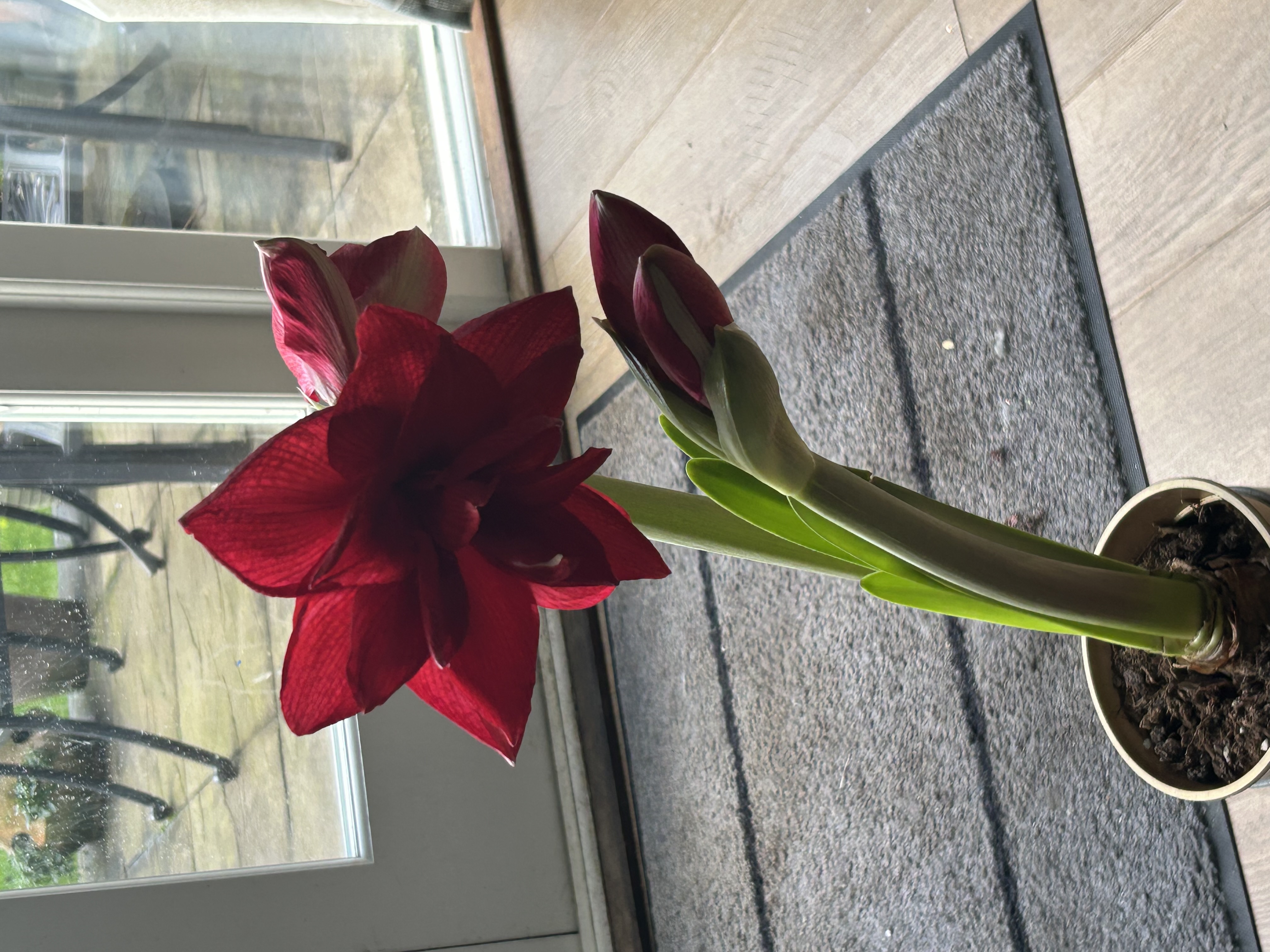
The plant in the photo is a red amaryllis, a Hippeastrum cultivar commonly grown as a flowering bulb indoors. It features a tall, sturdy stalk (or stalks) that rises from a large fleshy bulb, with broad, straplike leaves at the base. The showpiece is a cluster of large, trumpet-shaped blossoms with six petal-like tepals that form a dramatic bouquet. In this image, one fully opened flower head displays vibrant crimson petals with a velvety texture, while a second bud on the same stalk or a nearby stalk is still tightly closed, promising another bloom. Amaryllis blooms are long-lasting, often staying attractive for several weeks, and the plants are popular for holiday decorating and winter color. The leaves are typically dark green, glossy, and evergreen, emerging after or alongside the flowering stalk and helping to nourish the bulb for the next bloom cycle. The bulbs are slow-growing but capable of producing offsets (bulblets), which can be separated and potted to create new plants. What you are looking at is a classic, garden-store favorite that is especially valued for its dramatic early-spring or winter display when many other plants are dormant. Although the pictured plant is potted indoors, amaryllis can also be grown outdoors in warm climates where winters are mild. From a horticultural perspective, amaryllis belongs to the genus Hippeastrum, though the common name “amaryllis” is often used for these flowering bulbs in North America and Europe. The two share a general look but differ botanically; Hippeastrum cultivars are the ones widely sold for indoor forcing and winter blooms. Growth habit and structure: Amaryllis grows from a large bulb that stores energy for flowering. The flower stalk, or scape, emerges from the bulb and can reach 12–24 inches (30–60 cm) in height, depending on cultivar and growing conditions. The blooms are typically solitary on each scape, though some cultivars produce multiple blooms per scape. Each flower has six tepals that are often broad and overlapping, creating a star-like, trumpet-shaped bloom. Colors range from deep red to white, pink, or bi-colored patterns; the red variety in your photo is among the most iconic options. The foliage consists of several long, strap-shaped leaves that remain after flowering, helping to nourish the bulb as photosynthesis continues. Care and culture: - Light: Provide bright, indirect light. A sunny windowsill is ideal, especially in mornings or late afternoons. Avoid harsh, burning sun during the hottest part of the day, which can scorch leaves. In winter, when the plant is often in bloom, strong light helps keep the stems sturdy and the flowers vibrant. - Temperature: Amaryllis prefers temperatures around 60–70°F (15–21°C) during growth and flowering. Avoid placing it in drafty spots or near heating vents, which can stress the plant. At night, a slightly cooler period can encourage better color and longer-lasting blooms. - Watering: Water moderately during active growth to keep the potting mix evenly moist but not soggy. The bulb stores water, but sitting water can rot it. In the weeks after flowering, continue to water to feed the developing leaves; once the foliage begins to yellow and die back, reduce watering significantly. - Soil and pot: Use a well-draining, porous potting mix (a standard cactus or bulb mix works well) in a pot with drainage holes. The bulb should be planted so that about the top third to half of the bulb sits above the soil line. A shallow, wide pot is often better than a tall, narrow one, providing stability for the tall scapes. - Feeding: Fertilize with a balanced, water-soluble fertilizer at half strength every two weeks during active growth and flowering. Stop feeding once the leaves begin to yellow and the plant enters dormancy. Resume feeding when new growth appears after rest. - Humidity and air movement: Amaryllis does not require high humidity, but good air circulation helps prevent fungal issues. Avoid overcrowded planting and ensure leaves dry quickly after watering to prevent rot. - Pruning and flowering maintenance: After an individual bloom fades, you can remove the spent flower stalks, but leave the leaves to continue feeding the bulb. If multiple blooms appear on separate stalks, you can support them with gentle staking to prevent toppling. - Offsets and repotting: Over time, the bulb can produce offsets (bulblets) around its base. When the offsets are large enough, you can separate and pot them into their own containers. Repot every 2–3 years, or when the bulb has filled the pot and has begun to push out the rim. Use fresh soil and a pot one size larger to give the bulb room to grow. Blooming cycle and timing: Amaryllis bulbs often bloom about 6–10 weeks after planting if given warmth and light. If you are forcing blooms for a holiday, you can start the process by planting the bulb in late autumn and providing bright light and warmth. After the bloom, the plant typically continues to grow foliage for several months. The long, glossy leaves can persist for months, supplying energy to the bulb for future flowering. Dormancy and year-round care: To encourage reliable annual flowering, many gardeners simulate a rest period. After the leaves have died back naturally or are cut back, reduce water and allow the bulb to enter a cool, dry dormancy for 8–12 weeks. After this rest, reintroduce water and bright light, and the plant will typically begin to grow again, forming new leaves and eventually a new flower stalk. Some collectors keep successive generations of amaryllis in rotation so that a bloom is available for much of the year. Pests and diseases: Amaryllis is generally hardy but can suffer from common houseplant pests such as spider mites, aphids, mealybugs, and scale. Use insecticidal soap or horticultural oil if an infestation appears. Bulb rot can occur if the bulb is kept too wet or if there is poor drainage. Ensure pots drain well, use fresh soil at repotting, and avoid overwatering during the dormant period. Leaf tip burn can occur in very dry indoor air; occasional misting or a humidity tray can help in dry environments. Reproduction and species variation: The most commonly sold amaryllis for indoor forcing are Hippeastrum cultivars. They are prized for their dramatic, often long-lasting blossoms and the ease with which they can be grown indoors. In addition to red, many cultivars offer a range of colors, including white, pink, salmon, and bi-color combinations. Offsets from mature bulbs can be separated and potted to produce new flowering plants in a single season or kept to grow for propagation in subsequent years. Germplasm and toxicity: Like many members of the Amaryllidaceae family, amaryllis bulbs and plant parts can be toxic if ingested by humans or pets. It is wise to keep them out of reach of curious children and animals. If you notice any signs of distress or ingestion, contact a medical professional or veterinarian promptly. Ideal uses and display: The amaryllis is a classic choice for winter décor, holiday arrangements, and bright focal points in living rooms, entryways, or sunrooms. A single tall stalk with one or more blossoms creates a striking vertical accent, especially when paired with contrasting greens or lighter flowering plants. For longer-lasting display, rotate the plant gently to prevent leaning toward a window and steady the stem with a stake if needed. When trimmed properly after flowering, the plant can rebound vigorously the following season with a renewed bloom cycle, providing repeated color and drama in indoor spaces. In warm climates, amaryllis bulbs can also be grown outdoors in sheltered borders or containers, provided winter temperatures do not fall below freezing. In summary, the plant pictured is a red amaryllis (Hippeastrum), a bulbous flowering plant prized for its oversized, spectacular blossoms and straightforward care. With bright light, moderate watering, and periodic feeding, this plant can reward you with a dramatic display for weeks, then continue to thrive through the growing season as leaves nourish the bulb for future blooms. Proper rest periods and occasional repotting or division of offsets help maintain vigor and extend the plant’s life and flowering potential for many years.
Identification Time
February 16th, 2026
Notice
The function of Plantypia is using AI, so it may be inaccurate. Please use it for fun and reference only.
A plant result page that leads to the next useful action
After checking the name, continue into official plant database results.