Myrsine africana (African boxwood)
Description
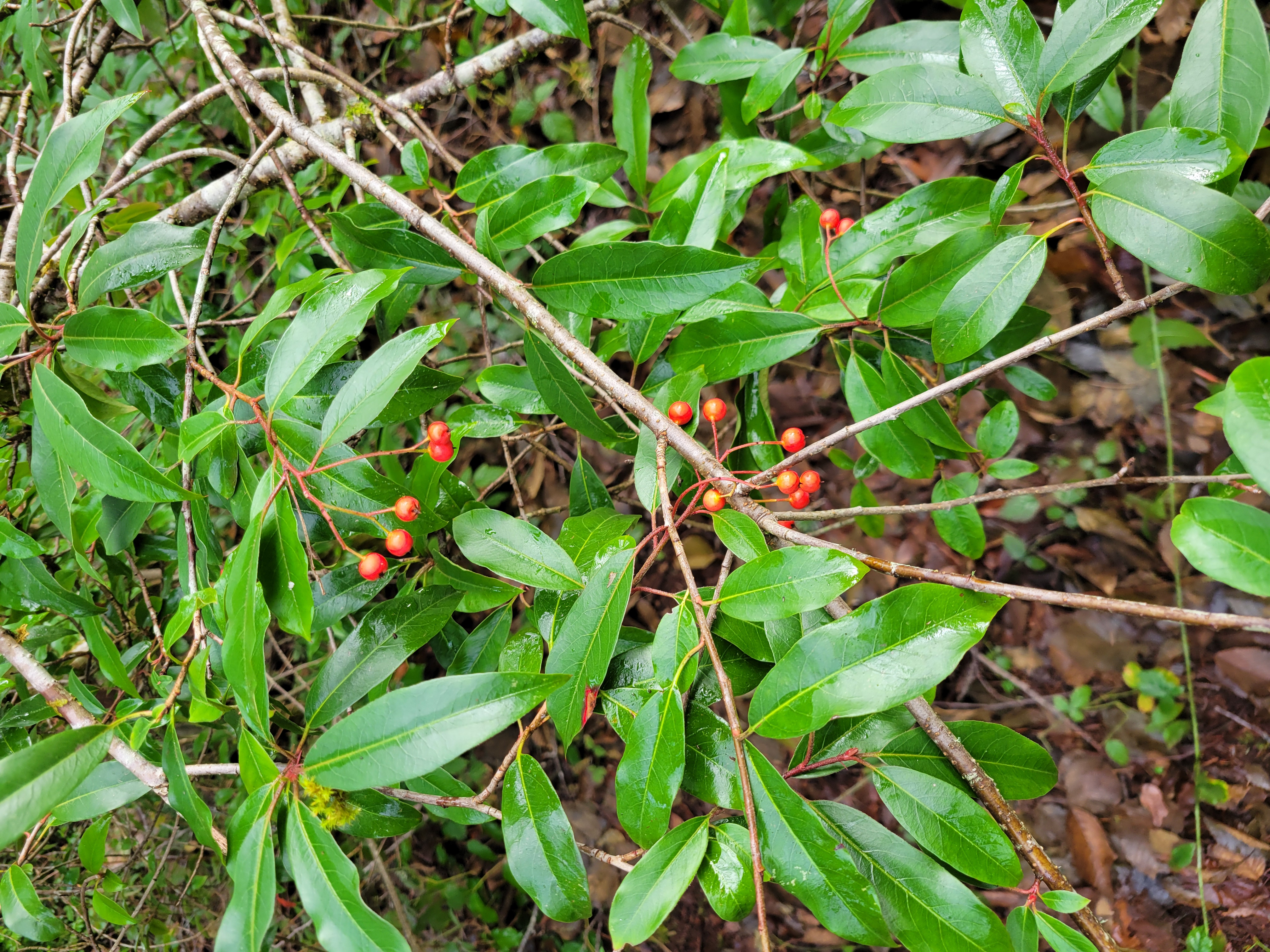
The plant in the photo resembles the evergreen shrub known as African boxwood, scientifically named Myrsine africana (sometimes listed under older synonyms such as Rapanea africana). It is a small to medium-sized shrub or hedge plant native to warm regions of Africa and naturalized in subtropical and tropical gardens around the world. Key identifying features include its glossy, leathery, oval to lanceolate leaves that are 2–7 cm long and 1–3 cm wide. The leaves have a smooth, entire margin and a prominent midrib with lighter venation. New growth often appears with a reddish tint, contributing to the plant’s ornamental appeal. A distinctive characteristic of this species is its small, bright red to orange drupes (berries), typically about 4–6 mm in diameter, which grow in tiny clusters along slender pinkish or reddish pedicels that emerge from the leaf axils. These berries persist through the season and add striking color in late fall and winter, attracting birds. The overall habit is an evergreen shrub with a compact to upright to spreading form, usually reaching about 1.5–3 meters in cultivation, though in ideal conditions it can grow taller. The stems are slender and brown, and the growth tends to be dense when pruned or trained as a hedge. The combination of year-round glossy foliage and bright fruit makes this plant a popular choice for borders, screens, and topiary in warm climates. In the photo, the plant appears to be somewhat sprawling, with many intertwined branches and a concentration of red fruit along the stems, consistent with a freely growing specimen or a spontaneously hedged planting. While Myrsine africana is the most likely identification, several related species in the genus Myrsine or closely resembling evergreen hedging shrubs can produce similar small red berries, so some regional variants may look slightly different depending on cultivar and climate. If the plant does not fruit in every season or if the leaf margins show subtle serration, it could point to a closely related species, but the observed combination of glossy elliptical leaves and red berry clusters strongly supports Myrsine africana as the identification. Care-wise, this species is relatively low-maintenance and forgiving, which aligns with its common use as a hedge or feature shrub in warmer garden zones. Growing conditions favor a warm, sheltered site with well-draining soil; it does not tolerate prolonged frost or waterlogged conditions. For gardeners in temperate regions, it is often cultivated as an evergreen specimen in protected spots or as a container plant that can be moved indoors during cold spells. Regarding toxicity, the berries are not considered edible for humans and may cause mild stomach upset if ingested in quantity. As with many ornamental shrubs that bear fruit, it’s prudent to supervise children and pets to prevent ingestion. With this in mind, good site selection and standard garden care will help the plant thrive and maintain its ornamental value. Care and cultivation tips follow. Growth and placement: Choose a sunny to lightly shaded location; the plant tolerates full sun in milder climates, but in very hot regions some afternoon shade helps maintain leaf quality and fruit set. Soils should be well-draining and fertile; the plant can tolerate a range of soil types from sandy to loamy, but it dislikes waterlogged conditions that promote root rot. In poor or compacted soils, amend with organic matter to improve drainage and structure. Irrigation: Water regularly during establishment, ensuring the root zone remains evenly moist but not waterlogged. Once established, Myrsine africana is relatively drought-tolerant but will perform best with consistent moisture, especially during hot, dry spells or in container cultures where soil dries out quickly. Mulching lightly around the base helps conserve moisture, reduce weed competition, and stabilize soil temperatures. Fertilization: Feed with a balanced slow-release fertilizer in spring as new growth begins. Avoid excessive nitrogen, which can lead to lush foliage with reduced fruiting or increased susceptibility to pests. In coastal or sandy soils, a supplemental trace mineral mix can help maintain vigor. Pruning and shape: This species responds well to pruning and is commonly used as hedging or sculpted topiary. Light pruning after fruiting helps maintain shape and remove any weak or dead wood. For hedges, consider a formal or informal approach depending on space and aesthetic goals; remove crowded growth to improve air circulation and light penetration, which helps reduce common problems like foliar mildew in humid climates. Pests and diseases: The plant is relatively resistant but can occasionally attract scale insects, mealybugs, aphids, or mites, particularly on new growth or in dry indoor environments. Regular inspection and appropriate horticultural oils or insecticidal soaps can manage these issues. Overwatering can lead to root rot, so ensure good drainage and avoid waterlogged pots if grown in containers. Fungal leaf spots are less common but can occur in persistently humid conditions; improving air flow and avoiding overhead irrigation helps mitigate this risk. Propagation: Myrsine africana can be propagated via semi-hardwood cuttings taken in late spring or early summer, placed in a well-draining rooting medium with high humidity. Layering is another option: bend a flexible, healthy stem to the ground, peg it, and allow roots to form before severing the new plant from the parent. Seeds are viable but slow to germinate and often require stratification or specific treatments; seed propagation is more suited to experienced gardeners or nursery propagation. Landscape use and seasonal interest: The evergreen foliage provides year-round structure, while the bright red berries add dramatic color in late autumn and winter when many other plants are dormant. It pairs well with other evergreen shrubs, grasses, and flowering perennials that offer contrasting textures and colors. It can serve as a hedge, screen, or background plant in mixed borders, and its compact to mid-sized habit makes it suitable for smaller gardens or containers, where it can be kept to a desired height with timely pruning. Safety and stewardship: While the plant is valued for aesthetics and resilience, remember that some ornamental berries can be mildly toxic if eaten in quantity. It is wise to label the plant in public or garden spaces and to supervise children and pets to prevent chewing on the fruits. If you are uncertain about the species due to regional cultivar variations, compare leaf shape, venation, and fruiting habit with local horticultural references or consult a local nursery to confirm identity before applying specific care routines. In summary, the plant shown appears to be an African boxwood type, Myrsine africana, a versatile evergreen shrub prized for its glossy leaves and small red berries. With a simple set of care practices focused on proper light, well-drained soil, regular moisture while establishing, light pruning for form, and protection from harsh frost in non-tropical climates, this plant should perform reliably as a hedge, screen, or focal shrub, offering structure and seasonal fruit color to the landscape.
Identification Time
December 31st, 2025
Notice
The function of Plantypia is using AI, so it may be inaccurate. Please use it for fun and reference only.
A plant result page that leads to the next useful action
After checking the name, continue into official plant database results.