White eggplant (Solanum melongena) – white-fruited cultivar
Description
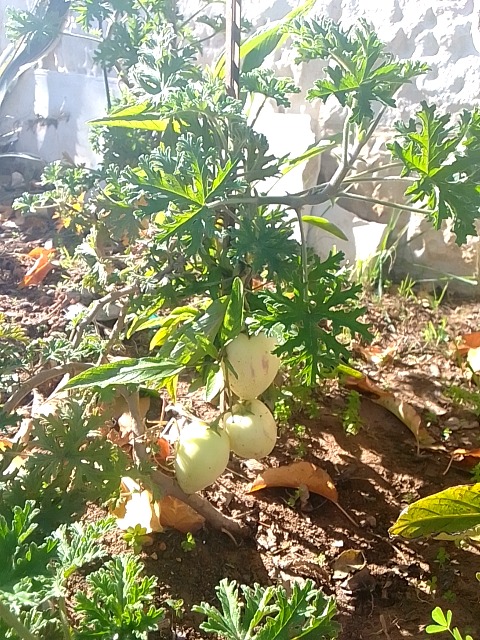
Based on the image, the plant appears most consistent with a white-fruited eggplant cultivar (Solanum melongena). The pale, greenish-white fruit hanging in small clusters from a woody, sprawling shrub-like plant is characteristic of many garden eggplants, including varieties that produce white, glossy fruit rather than the common purple ones. The foliage on some eggplant cultivars can range from broad, simple leaves to more deeply lobed or irregularly shaped leaves, especially in certain varieties and under some growing conditions. While the leaf shape in the photo appears quite deeply lobed, this can happen with some eggplant cultivars, or it could reflect local growing conditions. In any case, the fruits’ size, shape, and the plant’s overall habit point toward a Solanum species commonly grown for edible fruit, with white-fruited eggplants being a familiar and widely cultivated option. Overview and appearance: - Size and habit: The plant appears as a compact to moderately tall shrub with multiple branching stems. In many home gardens, white eggplants reach about 2–4 feet in height depending on variety and pruning, with a bushy form that benefits from staking or support as fruit load increases. - Leaves: The leaves of many eggplant cultivars are large and glossy, sometimes with a slightly wavy margin. Some cultivars can have more divided or lobed leaf margins, especially under certain environmental conditions or in juvenile growth stages. The leaves in the photo show a lobed or deeply cut appearance, which can occur in some Solanum species or hybrids and does not preclude being an eggplant. - Fruit: The fruits in the image are round-to-oval, smooth-skinned, and pale green to white in color. They appear to hang singly or in small clusters from the leaf axils or near the base of the plant. They resemble white eggplants in size (roughly the size of a large egg to a small pear, depending on the cultivar) and color when immature or fully matured for some white-fruited varieties. - Growth environment: The plant is growing in garden soil with full sun exposure and well-drained soil, which aligns with standard eggplant culture requirements that favor warmth, light, and good drainage. What this plant is used for: - Culinary use: White eggplants are used the same way as the more common purple varieties. They typically have a creamy, less bitter flesh when cooked and can be roasted, grilled, fried, stewed, or used in curries and moussaka. They often retain a smooth texture and mild flavor even when baked or grilled. - Garden enjoyment: Beyond culinary value, eggplants can be attractive garden subjects as they bear colorful fruit and can be grown in mixed borders or edible landscapes. They pair well with herbs, peppers, tomatoes, and many leafy greens. Care and cultivation (about 1000 words overview): - Site selection and light: White eggplants require full sun for best fruit set and yield. Aim for at least 6–8 hours of direct sun per day. In very hot climates, some afternoon shade can help prevent leaf scorch, but fruit production generally benefits from strong light. - Temperature and climate: Eggplants are warm-season crops that dislike cold snaps or cool soils. They thrive when daytime temperatures are consistently in the 70s–80s °F (21–27°C) and nighttime temperatures stay above 60°F (15°C). In regions with shorter summers, start seeds indoors or in a protected greenhouse and transplant after the danger of frost has passed and the soil has warmed. - Soil requirements: They prefer well-draining, fertile soil rich in organic matter. A slightly acidic to neutral pH (about 5.5–6.8) is ideal. Before planting, incorporate compost or well-rotted manure to improve soil structure, moisture retention, and nutrient availability. Raised beds or long, wide containers are excellent options in urban or drought-prone areas. - Planting and spacing: If starting from transplants, space plants about 18–24 inches (45–60 cm) apart in rows with 2–3 feet (60–90 cm) between rows. For container growing, select large pots (at least 5–7 gallons per plant) with drainage holes. Use a deep, well-draining potting mix and provide staking or a stake-and-rip system to support fruit load. - Watering and moisture management: Eggplants like consistent moisture but hate soggy soil. Water deeply and regularly to maintain evenly moist soil, especially during fruit set and growth. Mulch around the base of the plants to conserve moisture, suppress weeds, and stabilize soil temperature. Avoid overhead watering that can promote foliar diseases; instead, water at the base of the plant. - Fertilization: Eggplants are moderate-to-heavy feeders. Before planting, work in a balanced, slow-release fertilizer or compost. During the growing season, apply a phosphorus- and potassium-rich fertilizer to support flowering and fruit production, while moderating nitrogen to avoid excessive leaf growth at the expense of fruit. Side-dress every 3–4 weeks with compost or a balanced fertilizer according to label directions. - Pruning and training: Pruning is optional but beneficial for improving light penetration, air circulation, and fruit quality in many bush-type eggplant cultivars. Remove any crowded or lower-suture leaves to improve airflow. If your cultivar is early-branching and prone to sprawling, use stakes or cages to support stems as fruit set increases. For very vigorous plants, pinching the growing tips after several flowering clusters can help encourage bushier growth and early yields, but this is variant-specific and should be done based on the plant’s vigor. - Pollination and crop timing: Eggplants are self-pollinating to a degree, but fruit set can be improved with even light movement or gentle vibration to help pollen release. Timely harvest is important; if fruit remain on the plant too long, they may become tougher and the flavor can become more bitter, especially if overripe. - Pests and diseases: Common pests include flea beetles, aphids, thrips, whiteflies, hornworms, and cutworms. Diseases can involve powdery mildew, verticillium wilt, bacterial speck, and early blight. To reduce problems:: - Practice crop rotation and avoid planting eggplants in the same bed more than once every 3–4 years. - Use row covers early in the season to protect young transplants from insect pests. - Encourage beneficial insects (lady beetles, lacewings) and maintain diverse plantings. - Apply organic or chemical controls as needed, following label instructions and safety guidelines. Neem oil or insecticidal soap can help with soft-bodied pests; copper-based fungicides or sulfur can help with fungal issues, used per label directions and with caution around fruit development. - Maintain good air circulation to reduce humidity-related diseases; prune lower leaves and keep foliage dry when watering. - Harvesting: White eggplants are typically ready to harvest when the skin is glossy and taut and the fruit easily yields to a gentle pressure from a fingernail, yet the skin is not dull or wrinkled. For most white-fruited varieties, harvest when they reach the desired size, which is usually 3–6 inches (7–15 cm) long or as specified by the cultivar. Use a sharp, clean knife or pruning shears to cut the stem about 1–2 cm above the fruit, leaving a short stem attached. Handle fruits carefully to avoid bruising, which can lead to decay. - Storage: Fresh eggplants are best used soon after harvest. They can be stored in the refrigerator for about 3–7 days, preferably in the crisper drawer. Do not store in very cold temperatures or in sealed plastic bags for long periods, as this can cause chilling injury. If you have an abundance, eggplants can be frozen, pickled, or preserved by other methods after appropriate preparation. - Varieties and selection: White eggplants come in several shapes—round, oval, or elongated. Some popular white-fruited cultivars include white globe, white egg, and other hybrids bred for pale skin and creamy flesh. The fruit size and shape you observe will influence how you harvest and cook. - Safety and edible use: As with all nightshade vegetables, fully ripe eggplants are edible and nutritious. Do not consume unripe green fruit or leaves in large quantities, as they can contain alkaloids that may cause irritation. When in doubt, cook eggplant thoroughly to improve texture and flavor and reduce any potential bitterness or toxins associated with immature fruit. - Companion planting and garden design: Plant eggplants alongside basil, oregano, thyme, beans, or peppers to maximize synergy in the garden. Avoid planting near strong-root competitors or plants that require very different soil moisture levels. A light mulch layer can help regulate soil temperature and moisture, promoting steady growth and fruit set. - Troubleshooting quick guide: - Uneven or poor fruit set: Ensure adequate pollinator activity and sufficient warmth; consider hand-pollinating if necessary. - Bitter fruit or small fruit: Could indicate excessive nitrogen, insufficient potassium, or high plant stress; adjust feeding toward potassium-rich formulations and maintain consistent watering. - Leaf yellowing or wilt: Check soil drainage and watering practices; inspect for root diseases or nutrient deficiencies. - Pests: Use organic or chemical controls appropriate for vegetable crops; rotate crops yearly to prevent pest buildup. In summary, the plant in the photo most likely represents a white-fruited eggplant cultivar. If you decide to treat it as a white eggplant, follow standard warm-season cultivation practices: full sun, warm soil, rich but well-drained soil, regular moisture, and careful pest and disease management. With attentive care, you can enjoy a plentiful harvest of pale, creamy fruits that offer a mild, versatile flavor suitable for a wide range of dishes. If your plant proves to be a close relative within the Solanaceae family rather than a true eggplant, many of the same cultural guidelines will still apply, though fruit characteristics and harvest timing may vary slightly depending on the species or cultivar. Keep observing the plant’s growth habit and fruit development, and tailor watering, fertilization, and pruning to its specific vigor and local climate.
Identification Time
January 12th, 2026
Notice
The function of Plantypia is using AI, so it may be inaccurate. Please use it for fun and reference only.
A plant result page that leads to the next useful action
After checking the name, continue into official plant database results.