Asparagus fern (Asparagus setaceus)
Description
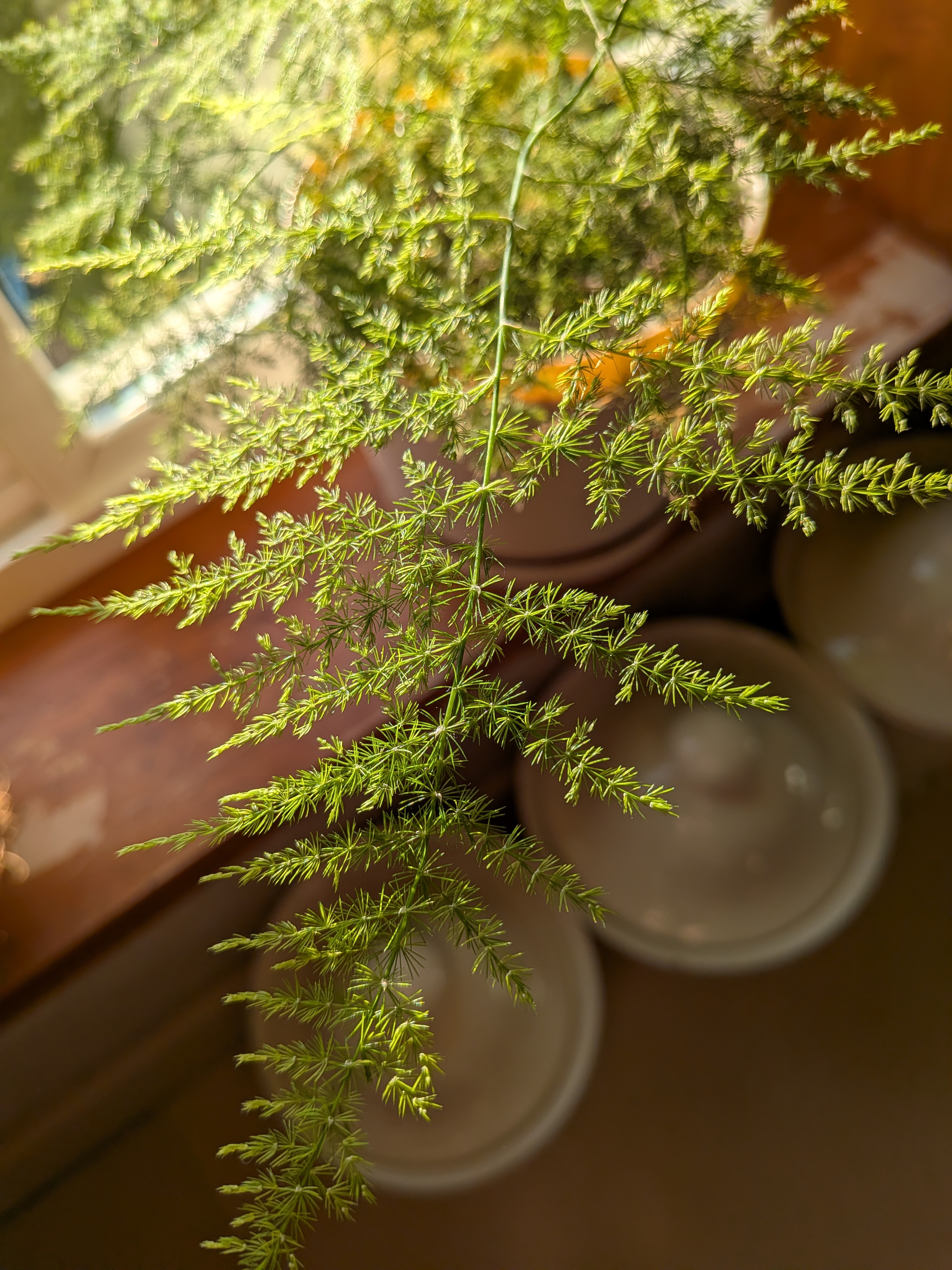
Identification and quick look: The plant shown resembles an asparagus fern, most likely Asparagus setaceus (lace fern) or a closely related cultivar such as Asparagus densiflorus. It is not a true fern. The airy, delicate foliage is created by many slender, wiry stems bearing a fine, feathery mass of tiny leaf-like structures called cladodes. These cladodes are arranged along the branches in a way that makes the plant look like a soft green cloud or lace. The overall effect is a graceful, cascading or arching plant that works beautifully in hanging baskets or as a tall, sculptural indoor specimen. In outdoor or ideal conditions, asparagus ferns can produce small white flowers in summer, followed by small red berries, but indoors flowers and fruit are less common. <br><br>Description of form and foliage: The plant has slender, flexible stems that can trail or rise depending on pot size and support. The foliage is extremely fine and lacy, with many tiny, needle-like cladodes that appear almost starry when viewed up close. The color is a bright to mid-green, often with new growth appearing lighter. Because the foliage is so delicate, the plant has a soft, airy look even when well grown. Growth habit varies by cultivar: some forms are truly trailing, while others form denser, plume-like clusters that spill from a pot. The stems are generally resilient and can tolerate a range of indoor conditions, making it a popular choice for houseplants, offices, and bright kitchens. <br><br>Natural habitat and care philosophy: In its native tropical Africa, Asparagus setaceus grows in warm, humid environments and climbs among other vegetation. In cultivation, it adapts well to indoor light levels that mimic bright, indirect sun. The plant does not require intense light, but very low light will cause leggy growth and a paler color, while harsh direct sun can scorch the delicate cladodes. With proper care, the plant remains attractive for many years, and even a single healthy plant can be divided to create multiple specimens. <br><br>Light and placement: Place the asparagus fern in a location with bright, indirect light for best color and fullness. It can tolerate medium light, but growth may slow, and new shoots may become sparse. Avoid hot, direct sun through south-facing windows, which can burn the fine foliage. In very low light, you’ll notice elongated internodes and duller color, and the plant may not flower or set berries in outdoor settings. If you are growing it in a hanging basket, rotate the plant occasionally so all sides receive light, which helps maintain a balanced, cascading shape. <br><br>Watering, soil, and humidity: The asparagus fern prefers evenly moist soil that drains well. Water when the top inch or so of the potting mix feels dry to the touch, and ensure the pot has drainage holes to prevent soggy roots. During the growing season (spring through summer), more frequent watering is needed, but you should avoid letting the plant sit in water. In winter, decrease watering slightly, allowing the top layer of soil to dry between waterings. Use a light, well-draining potting mix—standard houseplant mix amended with perlite or pumice works well. A mix that retains some moisture but drains quickly helps prevent root rot, which asparagus ferns are prone to if kept too wet. Humidity is beneficial; if your indoor air is dry, increase humidity by misting the plant, using a pebble tray, or placing it in a room with higher ambient humidity. The fine foliage will respond positively to a bit of extra humidity. <br><br>Temperature and feeding: Keep the plant in stable room temperatures between roughly 60–75°F (15–24°C). It is not frost-tolerant and should be protected from cold drafts. Avoid sudden temperature swings, which can stress the plant and lead to leaf drop. Feed every 2–4 weeks during the active growing season with a balanced liquid fertilizer diluted to half strength. Do not over-fertilize, as too much fertilizer can cause leaf burn and weak growth. In winter, feeding is usually unnecessary or should be very infrequent if growth continues. <br><br>Pruning, shaping, and propagation: Regular pruning helps maintain a tidy appearance and encourages bushier growth. Remove any yellowing or dead fronds at the base, and trim back leggy shoots to shape the plant. Because this species grows from a network of fine stolons and branches, it can be divided to produce new plants. For propagation, take tip cuttings from healthy stems and root them in a well-draining potting mix or in water until roots form. Cladodes themselves don’t root like true leaves, so new plants typically arise from fresh growth or division of the root ball rather than from the cladodes alone. Repot every 2–3 years or when the plant becomes root-bound. A larger pot will give the plant room to spread and maintain a lush, cascading look. <br><br>Pest management and common problems: The most common houseplant pests—spider mites, mealybugs, and scale—can afflict asparagus ferns, especially in dry indoor air. Signs include webbing or specks on the foliage, sticky residues, or yellowing fronds. Treat infestations promptly with insecticidal soap, horticultural oil, or neem oil, and increase humidity to deter mites. Overwatering can lead to root rot, so ensure proper drainage and avoid letting the plant sit in a saucer of water. Underwatering or very low humidity can cause browning tips and dry, brittle fronds; increase humidity and adjust watering. Leggy growth and a pale color often indicate insufficient light. <br><br>Toxicity and safety: Asparagus ferns are mildly toxic to pets and humans if ingested, due to saponins and other compounds. In homes with curious cats, dogs, or small children, place the plant out of reach or supervise interactions. If ingestion occurs and symptoms like vomiting or diarrhea appear, contact a medical professional. It’s not usually dangerous to handle, but always wash hands after pruning and avoid rubbing eyes. <br><br>Tips for long-term health and enjoyment: To keep the plant looking its best, give it a bright, indirect light source, maintain consistent moisture without waterlogging, and provide some humidity. Rotate and lightly prune to maintain a balanced, full shape. Because the foliage is fine and delicate, it helps to use a lightweight, airy potting mix so the roots stay well-aerated. A well-placed plant in a bright kitchen or living room can add a soft, ethereal texture to the space. If you’re growing it in a hanging basket, you can let multiple stems trail down for a dramatic curtain of greenery. Finally, remember that even though the plant has a fern-like appearance, its care and propagation will be more akin to other Asparagus species and not to true ferns, so base your care on moisture, light, and humidity rather than on any fern-specific rules. In summary, an asparagus fern is a versatile, resilient houseplant that rewards attentive watering, adequate light, and a touch of humidity with a continually graceful, lacy display.
Identification Time
November 28th, 2025
Notice
The function of Plantypia is using AI, so it may be inaccurate. Please use it for fun and reference only.
A plant result page that leads to the next useful action
After checking the name, continue into official plant database results.