Dracaena fragrans (Corn Plant)
Description
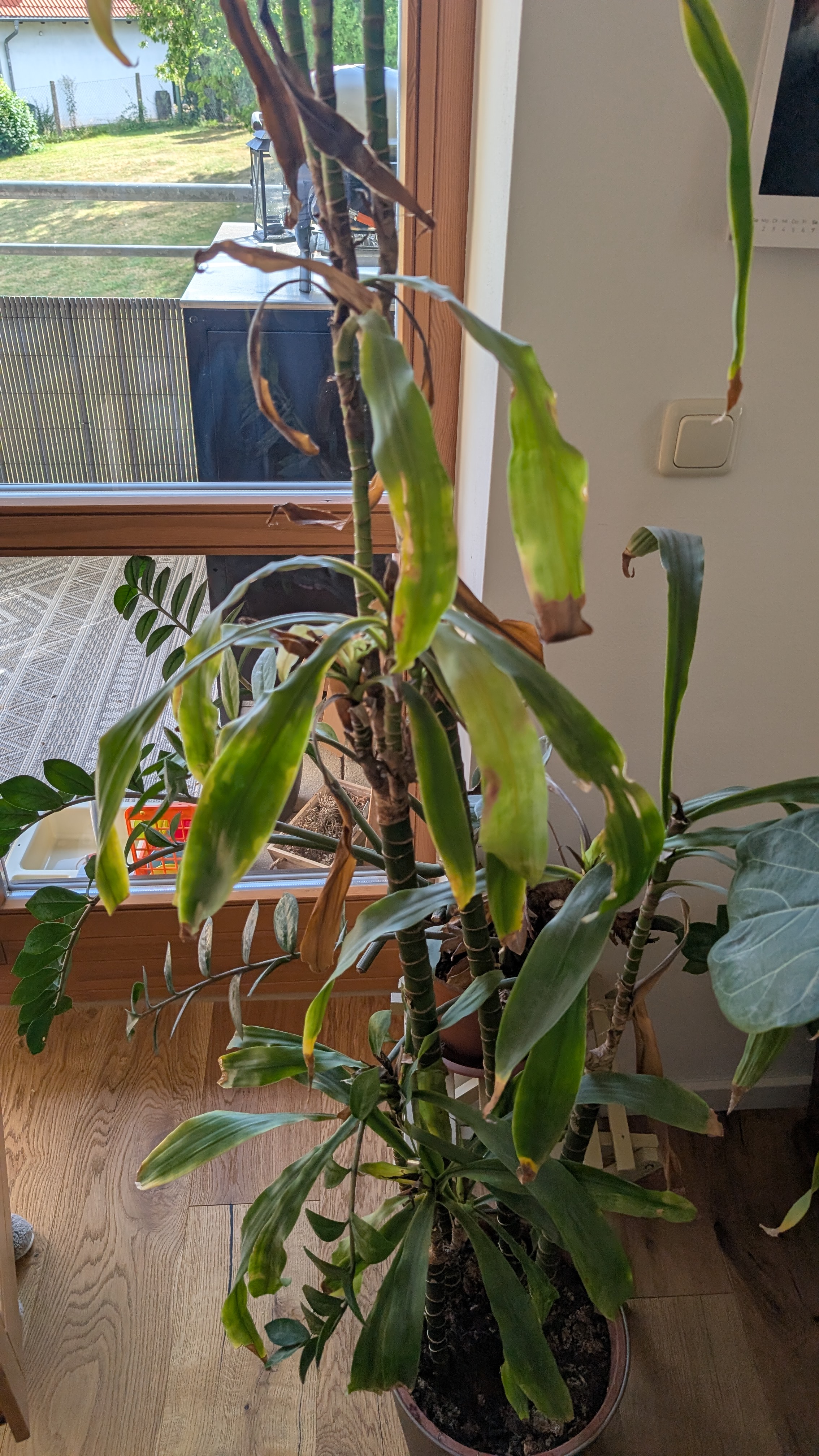
The plant pictured appears to be a Dracaena fragrans, commonly called the corn plant. It forms tall cane-like stems with ringed leaf scars and carries long, arching leaves that resemble corn foliage. In many homes a cultivar with a pale yellow or cream center stripe runs along the middle of each leaf (often labeled Massangeana). Even when the cultivar shows no strong variegation, the plant preserves that classic dracaena silhouette: one or more sturdy canes from the pot, topped by a cluster of leaves, with older leaves gradually dying back to reveal the bare cane. The leaves are broad and lance-shaped, typically 2 to 4 centimeters wide and up to 2–3 feet long in mature indoor plants; they are flexible, have smooth margins, and a pointed tip. Leaves can develop brown tips if the plant is stressed by dry air, fluoride in tap water, salt build-up from fertilizer, or inconsistent watering. The plant in the photo seems to have several canes with a mix of green leaves and a few yellowing ones, which is common in mature dracaenas when light is insufficient or when the plant is adjusting to a new pot or environmental change. Care and maintenance: Dracaena fragrans tolerates a wide range of light from bright indirect to fairly low light. In bright indirect light growth is robust and leaves remain vigorous; in lower light growth slows and variegation may fade. Avoid intense, direct sun, especially at early life stages or in hot climates, which can scorch leaves. If your plant is losing vigor or becoming leggy, move it to a brighter location with indirect sun. Rotate the plant periodically to keep growth evenly distributed around the stems. Water the plant only after the top 1 to 2 inches of soil have dried. Overwatering is a frequent problem; it can lead to root rot, yellowing leaves, and a mushy stem base. Ensure the pot has drainage holes and use a well-draining potting mix. Edges turning brown can indicate low humidity, so you might increase ambient humidity by grouping plants, using a humidity tray, or occasionally misting. In winter, reduce watering further since the plant's growth slows down. Avoid letting the plant stand in water long-term. The plant thrives at normal indoor temperatures between 65 and 75 F (18-24 C). It tolerates short dips but avoid cold drafts and temperatures below 60 F (15 C). Keep away from heating vents and cold windows where the air becomes dry or the leaf tissue is repeatedly cooled. Use a light but well-draining potting mix. A standard houseplant mix with some perlite or orchid bark to improve drainage works well. Dracaena fragrans grows slowly and can become root-bound; repot every 2 to 4 years depending on growth and pot size. Choose a pot only one size larger than the current one, remove the plant carefully to inspect root health, trim any rotten roots, and refresh the soil. Feed sparingly during the growing season with a balanced liquid fertilizer at half the recommended strength every 4 to 6 weeks. Do not feed in winter when growth slows. If you notice salt buildup on the soil surface or leaf tips turning brown, flush the soil with clear water and reduce fertilization. If the plant grows tall and leggy or has started to shed lower leaves leaving a bare cane, you can prune the crown: cut back the top of the stem and replant the cut top to make a new plant, or propagate the cuttings as cane cuttings in moist medium. After pruning, new shoots may emerge from the cut area, producing a fuller look. For indoors, you may re-root cuttings in water or in a light soil mix with good drainage. Keep an eye out for common pests such as spider mites, mealybugs, and scale. If you notice sticky honeydew, white fuzzy patches, or small moving pests, treat with horticultural oil or insecticidal soap and wipe leaves with a soft, damp cloth. Ensure good air circulation to reduce humidity and fungal issues. Brown leaf tips or margins can indicate fluoride toxicity from tap water; using filtered or distilled water can help. Dracaena fragrans is mildly toxic to pets and humans if ingested. It is not generally dangerous for humans, but pets may experience vomiting or irritation. If you have curious animals, consider placing the plant out of reach or choose a non-toxic alternative for households with dogs or cats. The corn plant is a classic, long-lived houseplant with a presence that is both elegant and forgiving. It adapts to a variety of interior settings—from bright living rooms to rooms with moderate light—and can be coaxed into a more compact shape or allowed to reach a graceful height. For caregivers who prefer minimal maintenance, this plant rewards with reliable performance, especially when given moderate light and a regular but light feeding schedule. The plant’s upright canes give it a refined, almost tropical look, especially when the leaves are a rich, uniform green or exhibit a sunny center stripe. If you want additional details or specific troubleshooting steps for your plant’s current condition (for example, diagnosing a yellowing problem or selecting the best fertilizer for a particular soil type), I can tailor recommendations to your climate, home conditions, and plant size. In summary: The plant is a Dracaena fragrans, commonly called the corn plant, a reliable and forgiving houseplant known for its tall cane stems and arching leaves. It tolerates average indoor light, appreciates moderate humidity, and requires well-draining soil and careful watering practices. With proper light, water, and a regular, modest feeding program, the corn plant remains a forgiving, long-lived addition to homes and offices, capable of thriving with minimal fuss and offering a striking, evergreen presence.
Identification Time
August 22nd, 2025
Notice
The function of Plantypia is using AI, so it may be inaccurate. Please use it for fun and reference only.
A plant result page that leads to the next useful action
After checking the name, continue into official plant database results.