Snake Plant (Sansevieria trifasciata)
Description
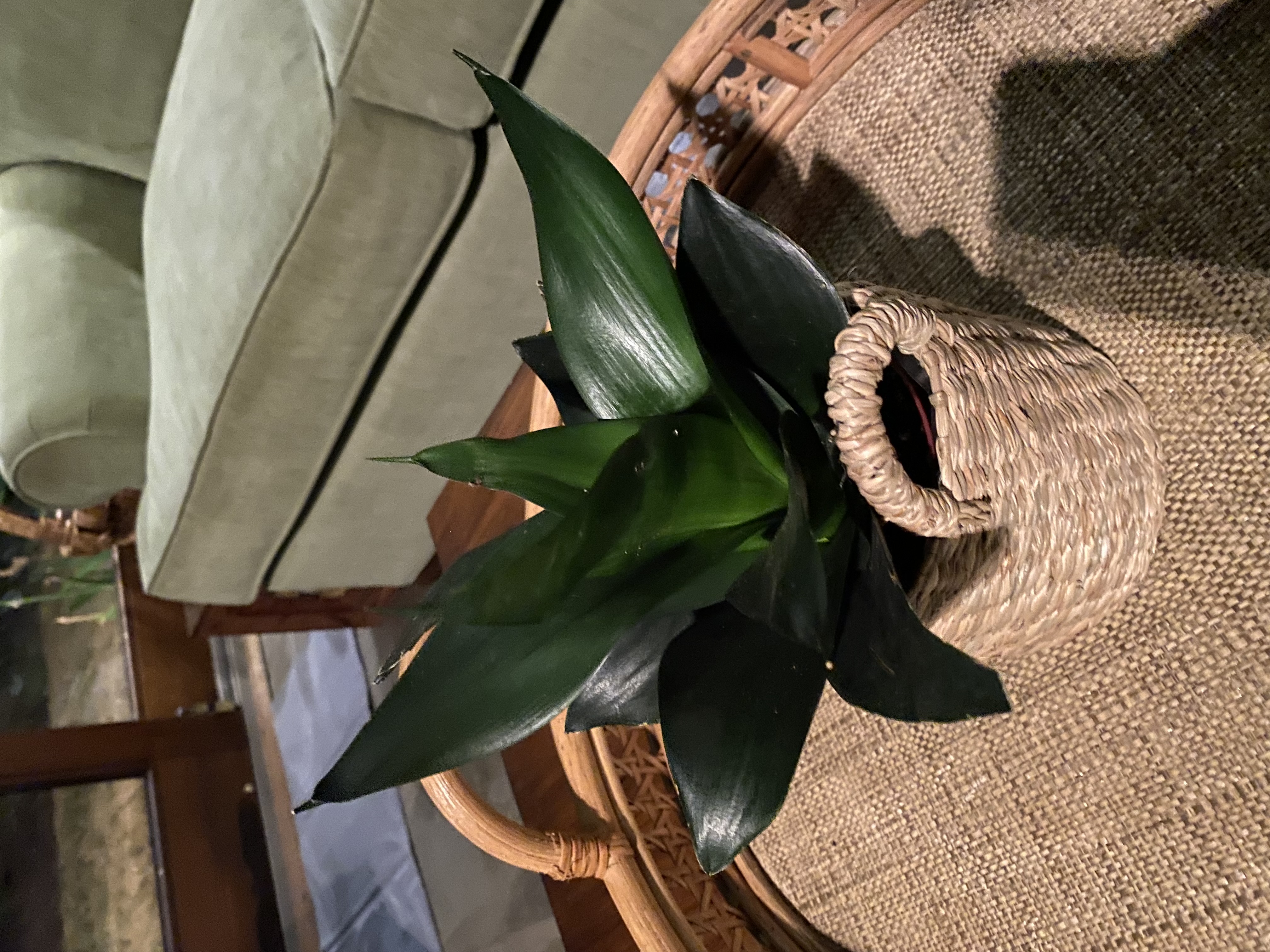
From the photo, the plant appears to be a Snake Plant, scientifically Sansevieria trifasciata, commonly sold as Dracaena trifasciata after a reclassification. It is often called mother in law's tongue because of the sharp, upright leaves. This plant is a staple of indoor gardening thanks to its architectural rosette of thick, succulent-like leaves and its remarkable tolerance for less-than-ideal conditions. The specimen shown in a small woven basket has a compact, low-growing rosette with broad, glossy, dark green leaves. The leaf margins are smooth, the tips come to a sharp point, and there is no visible variegation in this particular plant. Snake plants occur in many forms, from tall, sworded varieties to compact, short rosettes like the one pictured. They are native to West Africa, where they adapt to a range of light and moisture levels, and they have become one of the most dependable houseplants for beginners and seasoned growers alike. General characteristics and appearance - Growth habit: A rosette of stiff, upright leaves arising from a rhizome. In mature plants, new leaves emerge from the center to form a compact crown. The plant in the photo is a young specimen with a tight, rounded crown. - Leaves: Thick, fleshy, and firm, with a glossy surface. The leaves are broad at the base, tapering to a sharp tip. Color is a uniform deep green in this cultivar, though many Sansevieria varieties display banding or yellow margins. - Size: Indoor snake plants vary widely in height. Compact varieties and young plants like the one pictured typically remain around 6 to 12 inches tall when not actively growing. With age and proper care, some can reach several feet. - Pot and soil: The plant sits in a small woven basket with a soil mix that drains well. A breathable, well draining mix is essential for Sansevieria to prevent root rot. Care overview and practical guidance Light - Tolerance: One of the most forgiving features of the snake plant is its ability to tolerate a wide range of light conditions. It thrives in bright, indirect light but can survive in low light for extended periods. Direct sun, especially intense afternoon sun, can cause leaf scorch on some cultivars, but many varieties tolerate some direct sun with modest leaf damage. - Practical tip: For best overall growth and color, place it in bright indirect light. If you rotate the plant occasionally, you’ll encourage a more uniform shape. In spaces with only fluorescent lighting, growth will be slower but the plant will still thrive. Watering - Tolerance to drought: Snake plants are succulent-like and store water in their leaves, making them drought tolerant. Overwatering is the most common cause of problems. - Schedule: Water sparingly. In the growing season (spring and summer), water roughly every 2 to 4 weeks depending on light, temperature, and pot size. In cooler months or if the plant has a smaller root system, you may water even less frequently. - Method: Water thoroughly until it drains from the bottom of the pot, then allow the soil to dry completely before watering again. Empty any excess water from the saucer to avoid root rot. - Warning signs: Yellowing leaves or a mushy, soft base are typical indicators of overwatering. Brown tips can indicate low humidity, underwatering, or salt buildup from too-frequent fertilization. Soil and repotting - Soil mix: Use a well draining potting mix. A cactus or succulent mix is ideal; you can also mix regular potting soil with perlite or pumice to improve drainage. - Pot and drainage: Ensure the pot has drainage holes. Adequate drainage minimizes the risk of root rot and supports healthier growth. - Repotting: Snake plants grow slowly, often tolerating cramped conditions for years. Repot every 2 to 3 years or when the plant becomes visibly root-bound. Use a pot only slightly larger than the current one to encourage steadier growth. Temperature and humidity - Temperature range: They prefer average indoor temperatures between 60 and 85 F (15 to 29 C). They can tolerate short periods outside this range but should be protected from freezing temperatures. - Humidity: They are not fussy about humidity and do well in typical homes. Occasional dusting of the leaves is usually enough to keep them looking vibrant in average indoor humidity. Fertilization - Feeding: During the active growing season, fertilize lightly with a balanced houseplant fertilizer at half strength every 2 to 4 weeks. Do not overfertilize; the plant is relatively low-maintenance and can suffer from fertilizer burn if used too aggressively. - Dormant period: In fall and winter, reduce or suspend fertilization as growth slows. Pruning and maintenance - Cleaning: Wipe the leaves with a damp cloth or mist them occasionally to remove dust that can hinder photosynthesis and to maintain the plant’s glossy appearance. - Pruning: Remove any yellow or damaged leaves at the base with clean scissors or pruning shears. This helps redirect energy to healthy growth and improves the plant’s appearance. - Shape and health: Rotating the plant can encourage even growth. If a rosette becomes too tall or leggy, you can trim the central growth point, but this will slow overall growth and may produce a cluster of new shoots instead of a singular tall crown. Propagation - Offsets: Snake plants readily produce offsets, also called pups, from the base. These can be separated at repotting and planted in their own small pots. - Leaf cuttings: A leaf cut can be used for propagation, though this method is slower and may not always be successful for every cultivar. Cut a healthy leaf into 2–4 inch sections, let the cut ends callus for a day or two, then place on moist, well draining soil or in water until roots form. - Practical note: When dividing, ensure each offset has some roots attached to improve success rates. Common issues and solutions - Overwatering: The most frequent problem. Ensure the pot drains well and allow the soil to dry out between waterings. If root rot has begun, you may need to remove affected roots and repot in fresh soil. - Underwatering: Leaves may become wrinkled or pliable and show brown tips. Water more thoroughly but still follow the rule of drying between waterings. - Pests: Spider mites, mealybugs, and scale can appear, especially in dry indoor air. Wipe leaves with a damp cloth, rinse with a gentle spray, and treat with insecticidal soap or horticultural oil if infestations occur. - Sunburn: In very bright direct sun, especially through glass, leaves can scorch. If you notice pale or bleached patches, move the plant to a location with bright indirect light. Toxicity and safety - Toxicity: Snake plants are mildly toxic to pets and humans if ingested, causing nausea or vomiting in animals. Keep it out of reach of curious pets and small children, or choose non toxic alternatives if ingestion is a concern. Benefits and aesthetic considerations - Air quality: Snake plants are widely cited for their air purifying abilities. They can help filter certain indoor air pollutants, and their upright form adds architectural interest to rooms, offices, or kitchens. - Versatility: Their compact rosettes suit tabletops, shelves, or small corners. The plant in the photo would look especially nice in a minimalist, modern, or boho-inspired space. Its dark leaves provide a striking contrast to lighter furniture and decor. - Maintenance: The plant’s forgiving nature makes it ideal for busy households, renters, or those new to plant care. It tolerates neglect, yet rewards regular attention with healthier growth and a striking presence. Final note on identification - Based on the visible characteristics in the image, the plant is best identified as a Snake Plant, a hardy, adaptable member of the Sansevieria/Dracaena group. While many Sansevieria varieties feature variegation or yellow margins, this particular plant presents a solid dark green rosette typical of several non variegated forms or young plants. For precise cultivar identification, consider growth habit, leaf patterns as the plant mature, and any regional catalog references where you purchased it. Regardless of the exact cultivar, the care principles outlined above will support vigorous growth and long term health.
Identification Time
August 18th, 2025
Notice
The function of Plantypia is using AI, so it may be inaccurate. Please use it for fun and reference only.
A plant result page that leads to the next useful action
After checking the name, continue into official plant database results.