Star Jasmine (Trachelospermum jasminoides)
Description
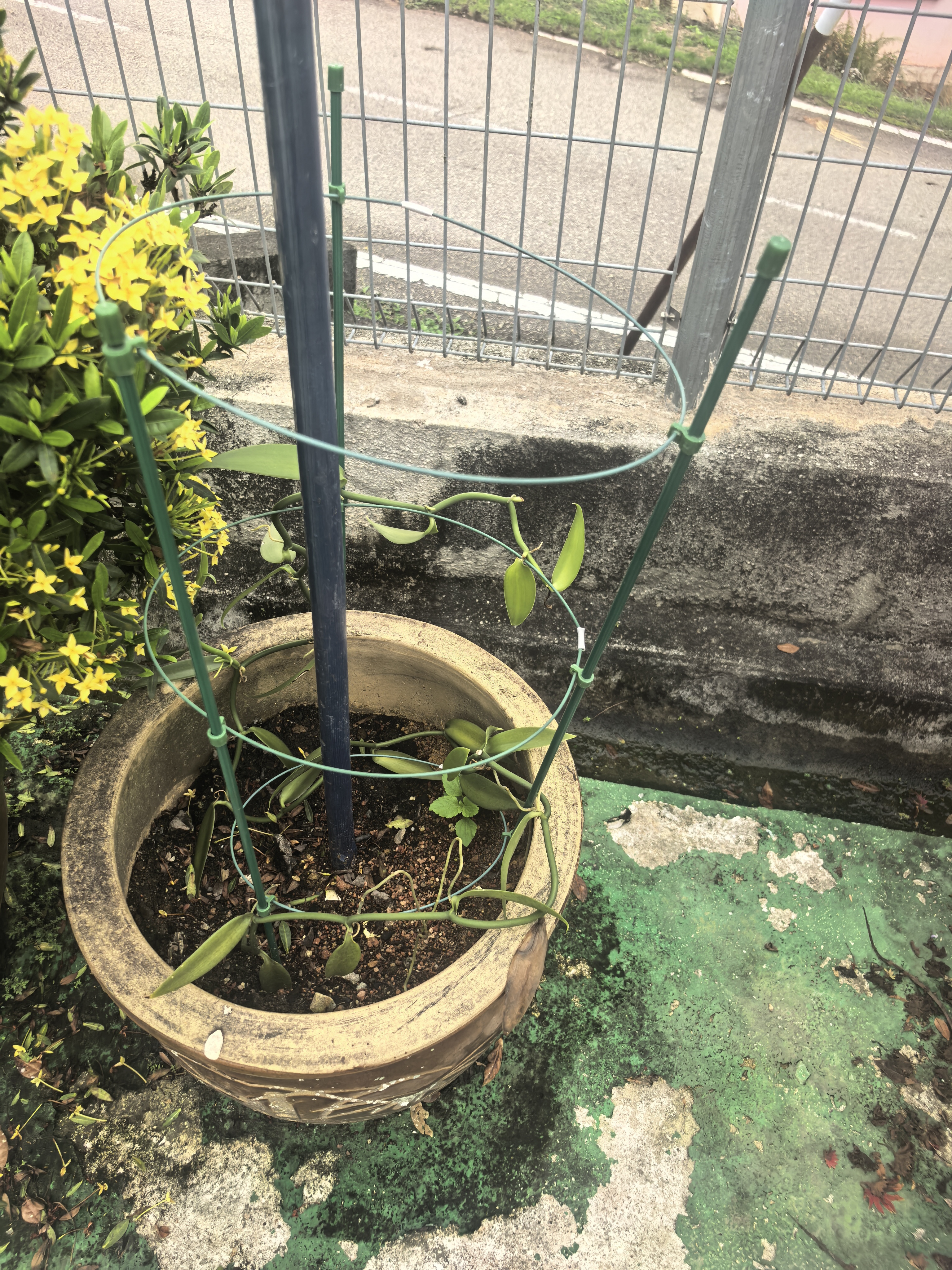
Star Jasmine, also known as Trachelospermum jasminoides, is a popular evergreen climbing vine prized for its glossy foliage and highly fragrant flowers. Native to East Asia, it is commonly grown in pots or trained along fences, trellises, arbors, or circular supports like the ring seen in the photo. In the image, the plant is a slender, winding climber with opposite, leathery leaves that are oval to oblong in shape. The stems are green and flexible, capable of twining around supports to form a dense, vertical feature in a container. Flower buds may be absent at times, especially outside of peak blooming periods, which is why the plant may appear mostly as lush green foliage. When in bloom, it produces small star-shaped flowers with five petals, typically white to creamy white, sometimes with a pale yellow throat, and a wonderfully sweet fragrance that is strongest in the evening and early morning. The overall habit is vigorous but manageable in a large pot or trained against a sturdy frame. It often behaves as a semi-evergreen to evergreen climber, depending on climate and winter protection. Key characteristics: - Growth habit: woody, twining vine that climbs by wrapping around supports. It can reach several meters in good conditions when given a strong trellis or arched framework. - Leaves: opposite, simple, glossy, dark green, with a leathery texture. Leaf size commonly ranges from about 2 to 6 cm long, depending on age and cultivar. - Flowers: small, star-shaped blooms with a strong, sweet, citrusy fragrance. Flowering typically occurs in late spring through summer and may repeat in warm climates with adequate light. - Foliage color: evergreen in mild climates; in colder zones foliage may drop back and regrow from the base when temperatures rise again. - Fragrance: one of the plant’s main appeals; a pleasant perfume that can fill a garden or balcony evening air. Care overview: - Light: Bright light is best. Full sun to light shade encourages flowering and dense growth. In very hot regions, some afternoon shade can prevent leaf scorch while still supporting abundant blooms. - Watering: Regular watering during the growing season, ensuring the pot drains well. Allow the top inch of soil to dry between waterings. In winter, reduce frequency, but do not let the soil stay bone dry for extended periods. - Soil: Well-draining, fertile potting mix. A slightly acidic to neutral pH works well. In containers, use a mix that retains some moisture but drains quickly to avoid root rot. - Fertilizer: Apply a balanced fertilizer every 4 to 6 weeks during spring and summer. Avoid excessive nitrogen, which promotes leaf growth at the expense of flowering. A phosphorus-rich component can help bloom if blooms are weak. - Pruning and training: After flowering, prune lightly to maintain shape and control vigor. For container culture, guide new shoots onto the ring or stake, securing them gently with soft ties. Periodic pruning prevents legginess and keeps the plant compact and flowering-focused. - Potting and repotting: Every 2–3 years, or when roots fill the pot, refresh the soil and upgrade to a larger container. Clean any old potting mix from the root zone and trim dead or damaged roots if repotting. - Propagation: Semi-hardwood cuttings in late spring or early summer root well in a moist, well-drained medium. Layering is another option: bend a flexible cane to the soil, anchor it, and allow roots to form before severing. - Pests and diseases: Watch for aphids, scale insects, mealybugs, and spider mites in dry indoor conditions. Wipe leaves with water or use a gentle horticultural soap if infestations occur. Ensure good air circulation to help prevent fungal spots. Root rot can arise from overwatering or poor drainage; always secure a draining pot and fresh, well-draining soil. - Temperature and hardiness: Star Jasmine is hardy in warm temperate to subtropical regions. In USDA zones 8–10 it can remain outdoors year-round; in cooler areas it should be grown in a container that can be moved indoors during frost. Protect from freezing temperatures and provide some winter shelter in marginal climates. - Toxicity and safety: The plant contains compounds that can irritate the skin in sensitive individuals and can be toxic if ingested by pets or humans. Wear gloves when pruning and keep the plant out of reach of curious children or pets. Design notes and practical tips: - A circular wire ring and a vertical stalk, as shown in the photo, is an effective training method for Star Jasmine in pots. Start by fastening the main stem to the ring with gentle ties and guide side shoots to fill gaps, creating a lush, rounded frame that highlights the foliage and fragrance. - For best fragrance and flower production, provide the plant with a sunny or bright location for several hours a day. If your goal is dramatic bloom, ensure a consistent day length and temperature range that mimics its warmer origins. - If you notice leaf tips browning or leaf drop, assess for underwatering, low humidity, or drafts. Conversely, pale yellowing can indicate overwatering or nutrient imbalance; adjust watering and feed accordingly. - Seasonal care: in spring, feed to support new growth and flowering. In fall and winter, reduce water and cease heavy feeding to encourage rest without stressing the plant. - Companion planting and aesthetics: Star Jasmine pairs well with drought-tolerant ornamentals and can act as a fragrant backdrop for yellow or blue flowering shrubs, or be trained along a fence to create a scented corridor on warm evenings. In summary, the plant in the image most closely resembles a Star Jasmine climbing vine, a reliable choice for container culture when given a sturdy support and bright light. Its evergreen foliage, paired with the promise of sweetly scented blooms in season, makes it a popular ornamental for balconies, patios, and small gardens. With attentive watering, disciplined pruning, and careful feeding, a potted Star Jasmine can become a long-lasting focal point that rewards you with fragrance and greenery year after year.
Identification Time
December 29th, 2025
Notice
The function of Plantypia is using AI, so it may be inaccurate. Please use it for fun and reference only.
A plant result page that leads to the next useful action
After checking the name, continue into official plant database results.