Bryophyllum daigremontianum (syn. Kalanchoe daigremontiana; “Mother of Thousands”)
Description
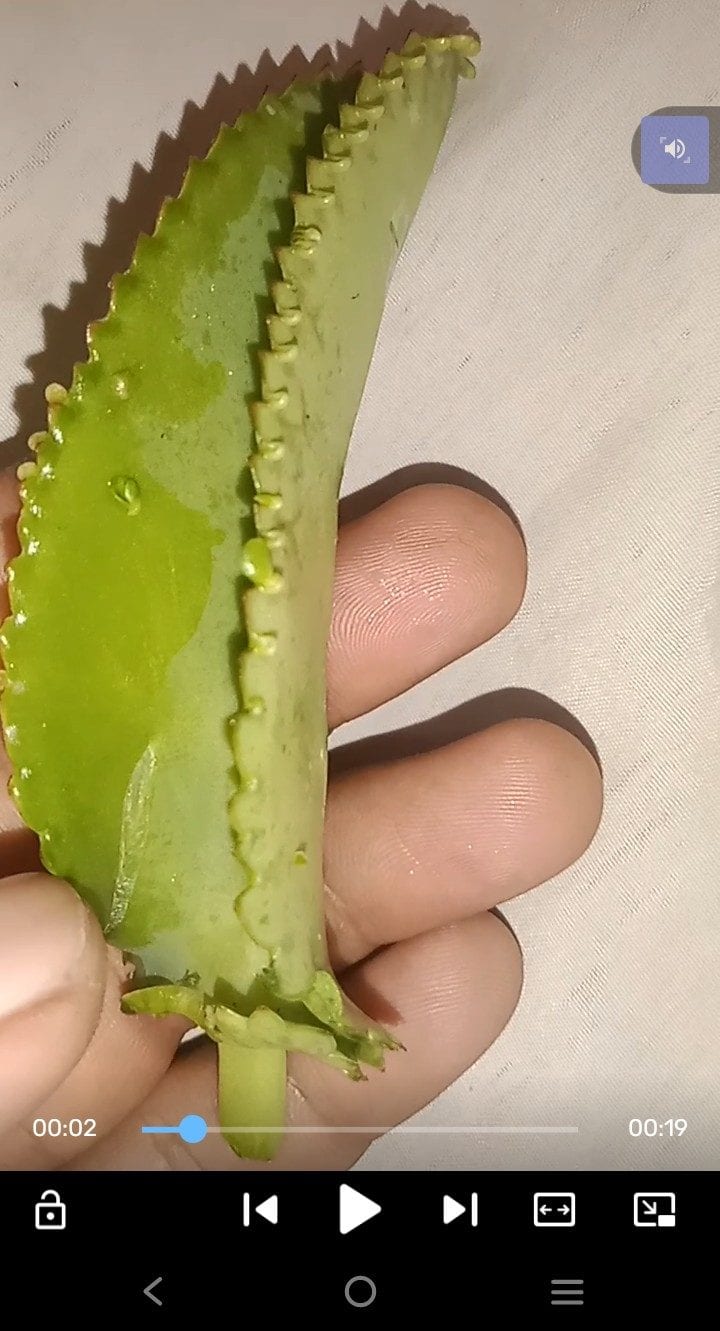
The plant in your photo appears to be a succulent leaf with small “baby plantlets” forming along the margins. This leaf-margin plantlet formation is characteristic of the genus Kalanchoe/Bryophyllum, and the most commonly encountered species with this exact look is Bryophyllum daigremontianum (often sold as Kalanchoe daigremontiana), commonly called “Mother of Thousands.” In this species, the leaves are thick and fleshy (glaucous green to green), with scalloped/serrated edges that produce numerous tiny offsets. Key identification clues from the image: - Thick, fleshy leaf tissue typical of succulent members of Kalanchoe/Bryophyllum. - Serrated leaf margins (small tooth-like projections). - Along the edge, there are tiny clustered structures resembling baby plantlets/offsets developing from the notches on the leaf. Because several close relatives (e.g., Kalanchoe daigremontiana, Kalanchoe delagoensis, and other Bryophyllum species) can look very similar in a single close-up, the confidence is moderate rather than high. If you can share a wider photo of the whole plant (rosette habit, leaf size/shape, and whether the undersides are different in color), I can narrow it down further. --- About the plant (appearance and growth habits) Bryophyllum daigremontianum is a fast-growing succulent typically forming a rosette of upright, elongated-oval leaves. The leaves are usually matte to slightly glossy, with a strong midrib and slightly wavy/saw-toothed edges. The leaf margins are where the plant’s signature trait appears: plantlets (tiny replicas of the parent) develop along the teeth. When the plantlets become heavy enough, they can detach and take root readily in nearby soil—hence the common name “Mother of Thousands.” Depending on light, the leaves may range from medium to dark green; in brighter conditions, they can show reddish or purple tints along the edges and underside. In mature plants under good light, the plant can also produce clusters of tubular flowers (often salmon to orange-red), though flowering is not always seen indoors. --- Light requirements - Best: very bright light, ideally several hours of direct sun (especially morning sun). - Indoors: place near a sunny window (south or west-facing where available). - If light is too low: leaves tend to stretch, become thinner, and the plantlets may be fewer. A practical approach: start with bright indirect light and gradually introduce more direct sun over 1–2 weeks to avoid sunburn. --- Watering and soil This plant is drought-tolerant but sensitive to overwatering. - Soil: use a cactus/succulent mix, or a very gritty, fast-draining blend (e.g., potting mix + perlite/pumice/coarse sand). - Pot: make sure the pot has a drainage hole. - Watering rule: water thoroughly, then let the soil dry out completely before watering again. - Frequency: typically every 2–4 weeks indoors, but this depends heavily on temperature, light, and season. Signs of problems: - Overwatering/poor drainage: yellow, translucent, mushy leaves; slow decline; possible stem/root rot. - Underwatering: leaves may look slightly shriveled or thinner, especially near the base. --- Temperature and humidity - Ideal indoor range: about 18–27°C (65–80°F). - Minimum: keep above ~10°C (50°F). Frost can damage leaves and stems. - Humidity: average home humidity is usually fine. Good airflow helps prevent fungal issues. --- Fertilizing Because it’s a succulent, it doesn’t need heavy feeding. - Spring to summer: use a diluted balanced fertilizer or a cactus fertilizer (about 1/4 to 1/2 strength) once every 4–6 weeks. - Winter: pause or fertilize sparingly. --- Propagation (easy, because of those leaf-edge plantlets) This species is one of the easiest succulents to propagate. 1) Using leaf plantlets (from the margins): - Allow plantlets to fully develop. - Once they detach, place them on top of dry, gritty soil. - Mist lightly only if needed to settle them, but avoid soaking. - Keep in bright light; within a few weeks, they usually root. 2) Leaf or stem cuttings (works for many Kalanchoe/Bryophyllum types): - Take a cutting, let it callus (dry) for 1–3 days. - Plant in dry gritty mix. - Water lightly after roots establish (often 2–3 weeks). Important: Because plantlets spread easily, you may want to remove them if you don’t want the plant to “self-propagate” all over the pot. --- Common pests and issues Well-draining soil and correct watering usually prevent most problems. - Mealybugs: white cottony clusters in leaf axils. - Scale insects: small brown/gray bumps. - Spider mites (less common but possible in dry indoor air): fine webbing and stippling. Management: - Isolate the plant if you notice pests. - Wipe leaves with a cotton swab dipped in isopropyl alcohol (for small infestations). - For more serious cases, use insecticidal soap or horticultural oil according to label directions. --- Toxicity and safety Many Kalanchoe/Bryophyllum species contain cardiac glycosides (often harmful to pets). - Keep away from cats, dogs, and other animals that may chew plants. - Sap can irritate some people—wash hands after handling. - If ingestion is suspected in a pet, contact a veterinarian or poison control immediately. --- Related information and tips - Manage the “mess”: plantlets can fall and root in unexpected spots. If you want a cleaner indoor plant, regularly remove mature plantlets. - Repotting: only when the plant outgrows its pot; typically every 1–2 years. The key is fresh, fast-draining soil and a pot with drainage. - Growth habit: over time, rosette plants may become leggy. Light control (brighter) and careful watering can slow decline. --- If you want, upload one more photo showing the whole plant (including the base/stem and leaf arrangement) and tell me whether the plant has tubular flowers or what region you’re in—then I can raise the confidence and specify the exact species more reliably.
Identification Time
September 19th, 2026
Notice
The function of Plantypia is using AI, so it may be inaccurate. Please use it for fun and reference only.
A plant result page that leads to the next useful action
After checking the name, continue into official plant database results.