Papaya (Carica papaya)
Description
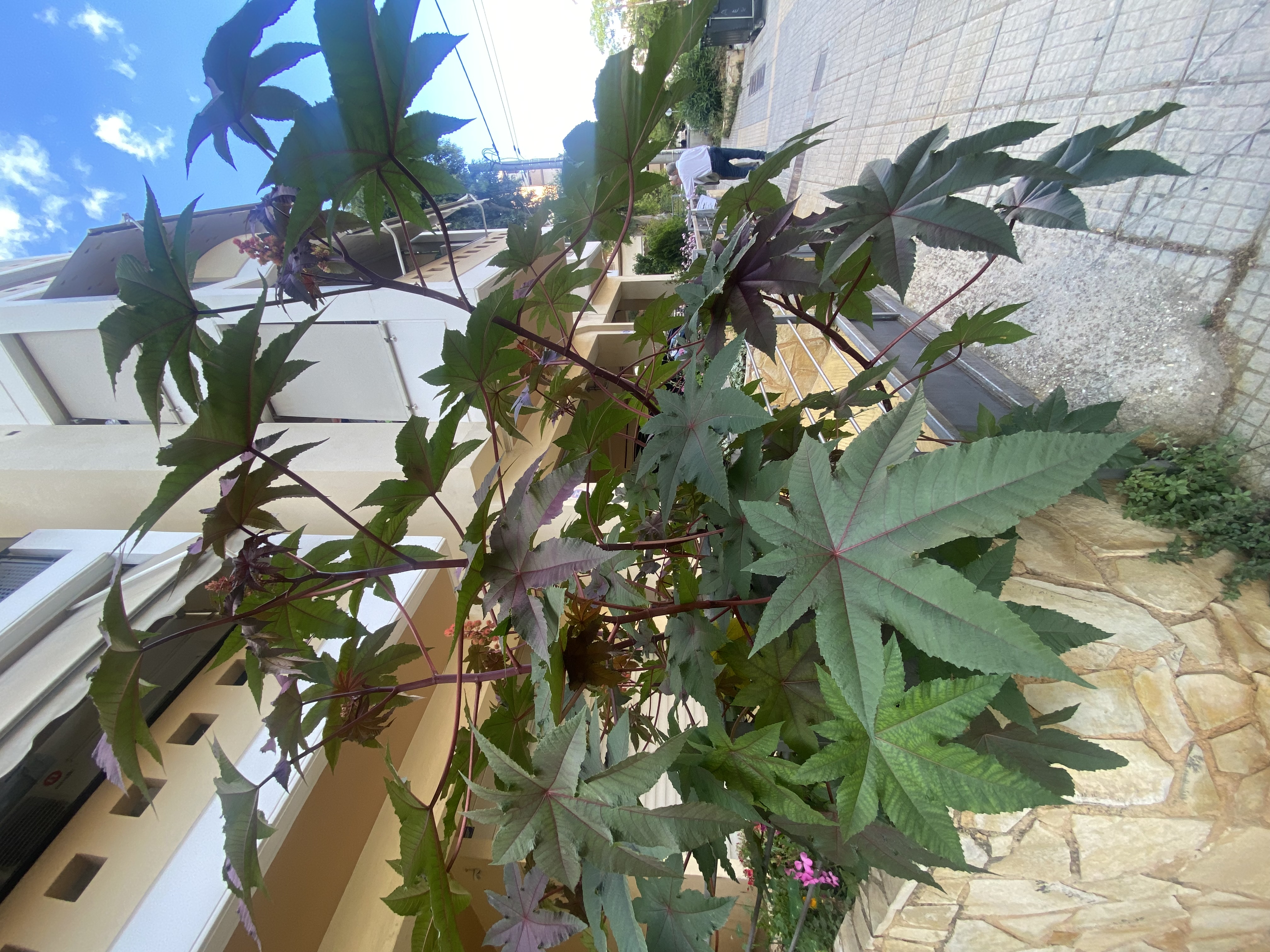
From the photo, the plant looks most like a Papaya (Carica papaya): it has strongly palmately lobed leaves on long, reddish petioles, and the developing flower/fruit clusters appear along the stems. Papaya is a fast-growing, short-lived tropical tree-like plant grown for its sweet orange fruit. **Key characteristics** - **Leaves:** Large, deeply palmate leaves (often 3–7 lobes) with prominent veins, bright to medium green. Leaves are typically held on thick petioles (leaf stalks) rising from the crown and/or along the trunk in younger plants. - **Growth habit:** Usually grows as a single trunk that can reach roughly 3–8 m (10–26 ft) outdoors (depending on conditions). It’s often described as “tree-like” but is botanically a herbaceous/tropical plant. - **Flowers:** Papaya is commonly **dioecious** (separate male and female plants) or sometimes hermaphroditic depending on cultivar. Flowers often appear close to the trunk in clusters. - Male plants produce clusters of small flowers. - Female plants produce larger, more obvious flower structures that later develop into fruit. - **Fruit:** Classic papayas form as elongated/roundish green fruits that ripen to yellow-orange. (The exact fruit stage isn’t visible in this photo.) - **Overall look:** In yards, papaya often creates an open canopy of large leaves, with the trunk visible beneath. --- ## Care and cultivation (English guide) Papaya is relatively easy to grow in warm climates, but it can struggle in cold or windy conditions. The two main goals are **warmth + consistent moisture** while avoiding waterlogging. ### 1) Light requirements - **Best:** Full sun. Papaya performs best with **6–8 hours of direct sunlight** daily. - **Tolerance:** It can tolerate partial sun, but flowering/fruiting may reduce. - **Practical note:** If you notice slow growth and fewer flowers, it may be receiving insufficient light. ### 2) Temperature and protection - **Ideal range:** Roughly **20–32°C (68–90°F)**. - **Cold sensitivity:** Papaya is very sensitive to frost. Even brief cold snaps can damage leaves and growth tips. - **Wind:** Use wind protection when possible—large leaves act like sails and can tear. ### 3) Watering - **Establishment:** Keep the soil evenly moist but not soggy. - **Once established:** Water regularly, especially during dry spells. - **Do not overwater:** Poor drainage can lead to root rot. - **Soil moisture check:** Water when the top few centimeters of soil dry slightly. ### 4) Soil requirements and drainage - **Soil type:** Loose, fertile, well-draining soil. - **pH:** Ideally slightly acidic to neutral (around **6.0–7.0**, though papaya is adaptable). - **Drainage is critical:** If growing in containers or heavy soil, mix in coarse materials (perlite, pumice, coarse sand) and ensure good drainage holes. ### 5) Fertilization Papaya is a heavy feeder compared with many ornamentals. - **Balanced nutrition:** Use a complete fertilizer (for example 10-10-10 or similar) and adjust based on growth. - **A simple schedule:** - During active growth (warm months), fertilize every **4–6 weeks**. - Reduce frequency in cooler, slower-growth periods. - **Micronutrients matter:** Plants often benefit from trace elements, especially if leaves show yellowing. - **Signs to watch:** - **Pale leaves / slow growth:** may indicate nitrogen deficiency. - **Leaf burn or dark green overly lush growth:** may indicate excess fertilizer. ### 6) Pollination and plant sex A key issue with papaya is ensuring the right plant type for fruit. - **If your plant is male:** It will usually flower but not set fruit. - **If your plant is female:** It can produce fruit if pollinated. - **If you have only one papaya plant:** Fruit set may be limited unless it is hermaphroditic or you have a nearby compatible plant. - **In gardens:** Bees and other insects help with pollination. - **Tip:** If you want fruit and you’re unsure of sex, identify flowers: female flowers typically lead to fruiting after successful pollination. ### 7) Pruning and training - **Minimal pruning:** Papaya generally doesn’t require heavy pruning. - **Remove damaged leaves:** Keep airflow and reduce disease pressure. - **Limit height if needed:** If it grows too tall, gardeners sometimes top it, but this can reduce future flowering—do so cautiously. ### 8) Mulching - **Use:** Apply organic mulch around the base to retain moisture and regulate soil temperature. - **Avoid:** Don’t pile mulch directly against the trunk. ### 9) Common pests and diseases Papaya can face a number of issues in warm, humid climates: - **Aphids, whiteflies, spider mites:** cause leaf stippling, curling, or sticky residue. - **Mealybugs:** can hide in crevices and weaken plants. - **Fruit pests:** birds and insects may damage developing fruit. - **Diseases:** - **Root rot / fungal issues:** usually linked to overwatering or poor drainage. - **Leaf spot / powdery mildew:** can occur with high humidity and poor airflow. **Prevention is best:** - Keep the plant in full sun. - Water at the soil level, not the leaves. - Remove infected leaves early. - Use clean gardening tools. **Organic/low-toxicity options (general):** - Insecticidal soap for soft-bodied pests. - Neem-based treatments can help as prevention. - For severe infestations, consult a local nursery or extension service for the best product registered in your region. ### 10) Container vs. ground growing - **In the ground:** Papaya thrives if drainage is excellent and temperatures remain warm. - **In containers:** Use a large pot with drainage holes and a fast-draining mix. Container-grown papaya will often need more frequent feeding and careful watering. - **Root space:** Constrain too much and growth may slow. --- ## Related information: fruiting expectations - **Time to fruit:** Often 6–12 months after planting (varies widely by climate, plant sex, and cultivar). - **Ripe fruit cues:** Papaya becomes fragrant and softens. Color shifts from green to yellow/orange depending on variety. - **Harvesting:** Pick when fruit is in the ripening stage for best flavor and storage. ## Safety note Papaya sap (latex) can irritate skin for some people. When pruning or handling the plant, consider gloves if you have sensitive skin. --- If you want, tell me your **location/climate (country + typical winter temperatures)** and whether you see **only flowers or also fruit**, and I can refine the ID confidence and give a more tailored care schedule.
Identification Time
June 5th, 2026
Notice
The function of Plantypia is using AI, so it may be inaccurate. Please use it for fun and reference only.
A plant result page that leads to the next useful action
After checking the name, continue into official plant database results.