Plectranthus sp. (likely a fuzzy, scalloped-leaf groundcover such as Swedish ivy or a Cuban oregano relative)
Description
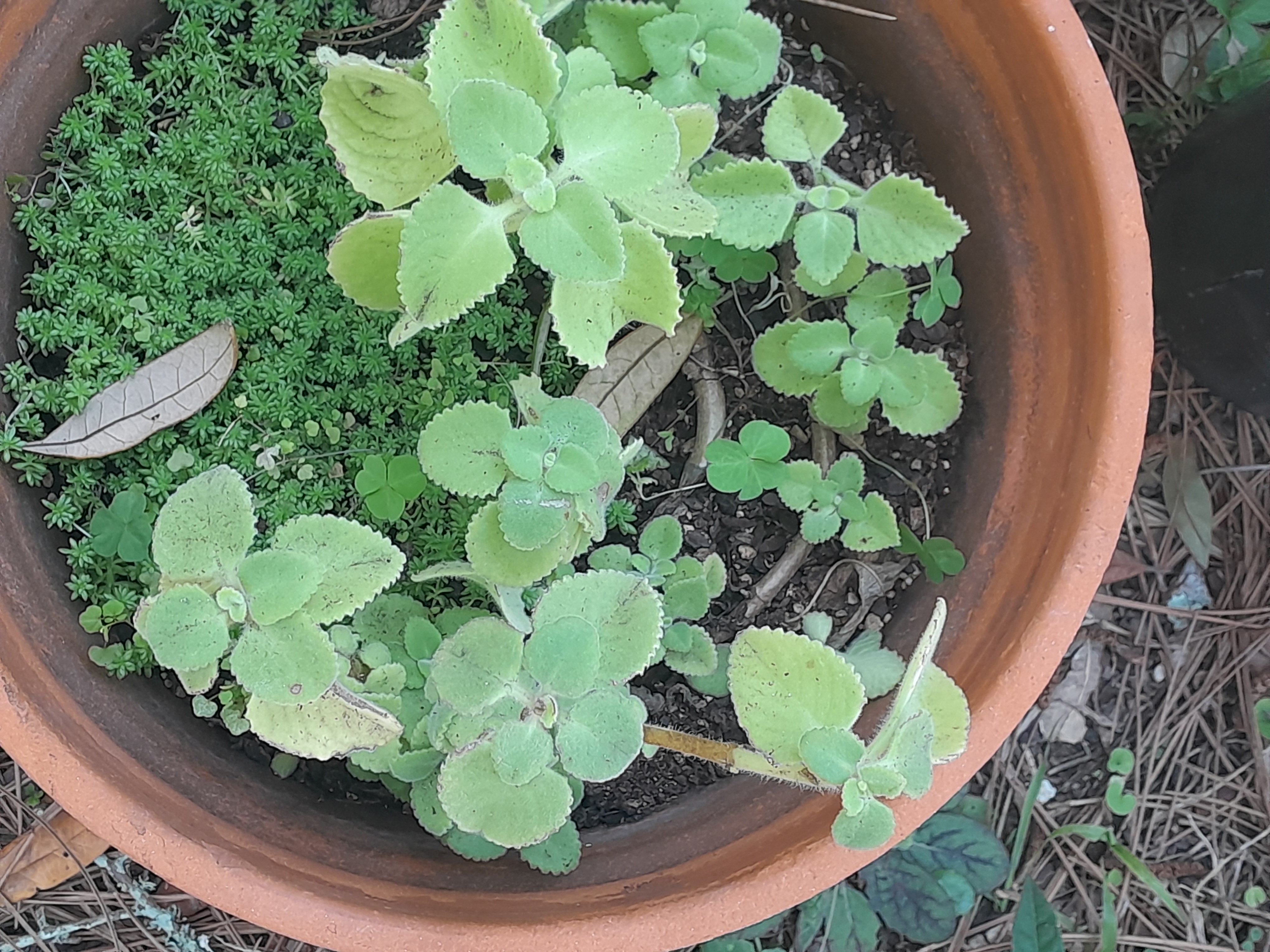
This plant appears to be a creeping Plectranthus species, a group in the mint family known for soft, fuzzy, scalloped-edged leaves arranged on trailing stems. The leaves are small to medium in size, broadly oval to nearly circular, with a delicate serration along the margins and a soft, velvety texture caused by short hairs. The color is a pale to mid-green, sometimes with a slightly yellowish cast, which can occur if the plant is grown in bright light or if it is slightly stressed. The stems tend to run along the surface of the potting mix or lay low to the soil, producing new buds and leaves at the nodes, which helps the plant form a dense mat. The overall habit is that of a low-growing, spreading groundcover or trailing houseplant, suitable for containers, borders, or as an adaptable indoor specimen. The leaves have a mild scent when crushed, characteristic of many Plectranthus species, with hints of mint, camphor, or oregano-like aroma depending on the exact species. Because this plant is a member of a widely cultivated ornamental group, it is common to see it used in hanging baskets, as a spiller in mixed pots, or as a compact filler in sunlit garden containers. It is typically sold or propagated from cuttings, which root readily in moist, well-draining soil or even in water, making it an easy plant to multiply for friends and gardeners alike. The look of the plant in the image—soft green, fuzzy leaves with a scalloped edge—closely matches many Plectranthus forms, including cultivars that are commonly grown as Swedish ivy (Plectranthus verticillatus) or as Cuban oregano relatives (Plectranthus amboinicus or P. neochilus). The precise species may be difficult to determine from a single photo, but the general identification as a fuzzy-leaved Plectranthus is robust and should guide care. Care-wise, this plant is forgiving, thrives in bright, indirect light, appreciates evenly moist but well-draining soil, and benefits from regular pruning to maintain a compact, bushy shape. For beginners, it offers a dependable introduction to tropical-looking foliage without requiring heavy maintenance. In cooler climates or under low light, growth may slow, leaves can become a touch smaller, and the plant may take on a leggier appearance; in warmer, brighter conditions, it tends to spread more quickly and fill out densely. When housed indoors, provide a bright windowsill or well-lit corner with a few hours of direct sun if possible, but avoid intense all-day sun that can scorch the leaves. If grown outdoors in warm, frost-free seasons, it behaves as a robust groundcover or trailing spiller, often self-seeding or rooting easily at the tips. Propagation is straightforward: take a tip cutting with several leaves, remove the lower leaves, and place the cut end in water or moist potting mix until roots form. Once rooted, transplant to a slightly larger pot or into a garden bed with good drainage. Fertilization is light; a balanced, water-soluble fertilizer applied monthly during the growing season helps maintain vigor, but over-fertilizing can lead to excessive leaf growth with softer tissue that may be prone to pests. Watering should be consistent but not waterlogged. The top layer of soil should feel just slightly damp to the touch before you water again; allow the surface to dry out a bit between waterings in cooler months to prevent root rot. Ensure the pot has drainage holes to avoid standing moisture. Soil should be a light, well-draining mix; a standard potting mix amended with perlite or sand for drainage works well. In terms of light, aim for bright light with some direct sun exposure daily if the climate permits, but in very hot, dry regions, protect the plant from the hottest noonday sun to reduce leaf scorch. Humidity is not critical; average indoor humidity is sufficient, though a light misting can help keep the fuzzy foliage from looking dry in very dry air. Pruning is beneficial and recommended to maintain a compact shape and to encourage branching. Pinch back the growing tips when the plant reaches a desirable height, and trim any leggy stems to promote bushier growth. Remove any leaves that show signs of yellowing, disease, or pest infestation. Pests that can occasionally affect Plectranthus include mealybugs, aphids, spider mites, and scale; treat with insecticidal soap, neem oil, or horticultural oil, taking care to cover the undersides of the leaves where pests like to hide. If you notice fungal leaf spots or mildew, improve air circulation and reduce overhead watering; trim affected areas and ensure the plant dries promptly after watering. This plant generally tolerates a range of conditions but performs best with consistent care: bright light, regular but not excessive watering, and occasional feeding during the growing season. In terms of garden use, it can serve as a graceful edge along pathways, a filler in container combos, or a groundcover in warm climates where winters are mild. If you wish to cultivate a culinary version, you should be specific about the species. Cuban oregano (Plectranthus amboinicus) and some related species are used as culinary herbs in various cuisines, with strong savory aromas and flavors; however, not all Plectranthus species are edible or palatable, and some may cause stomach upset if consumed in large amounts. Therefore, if you intend to use the plant for cooking, ensure you have correctly identified the exact species and verify its edibility before consuming. In summary, the plant in the photo is best described as a fuzzy-leaved Plectranthus groundcover, a versatile and forgiving plant that thrives in bright light, well-draining soil, and regular pruning. Its charming, soft appearance makes it ideal for decorative pots, balcony planters, or as a trailing accent in mixed plantings. With simple propagation by cuttings, modest fertilization, and careful pest management, this species can be enjoyed year after year, adapting to a wide range of indoor and outdoor settings.
Identification Time
March 21st, 2026
Notice
The function of Plantypia is using AI, so it may be inaccurate. Please use it for fun and reference only.
A plant result page that leads to the next useful action
After checking the name, continue into official plant database results.