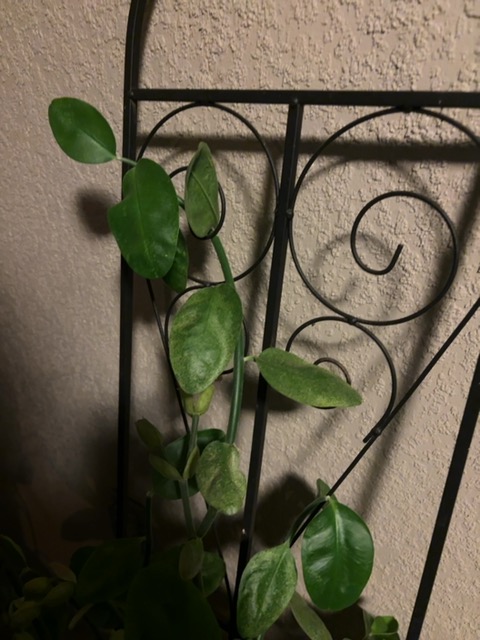
Pothos (Epipremnum aureum), commonly known as devil's ivy
Description
The plant in the photo closely resembles a pothos, a very popular and resilient trailing or climbing houseplant scientifically named Epipremnum aureum. It is often sold simply as pothos or by cultivar names such as Golden Pothos, Neon Pothos, or Jade Pothos. The characteristic heart‑shaped leaves and the way the vines drape over a trellis or hang down are classic hallmarks of this species. In most indoor settings, pothos grows as a versatile evergreen climber or trailer, making it ideal for shelves, window ledges, or decorative supports like a metal trellis such as the one in your image. Its stems are relatively slender and agile, producing aerial roots that can grip a surface or anchor into soil when you train the plant upward or across a support. The first leaves on new growth tend to be smaller and sometimes lighter in color, while mature vines display broader, more robust foliage. One of pothos’s strengths is its wide range of leaf colors and patterns, from solid green to striking variegation with cream or yellow tones. In low light, variegated cultivars can lose some of their contrast and gradually turn greener, as the plant adjusts its photosynthetic strategy to available light. This adaptability has helped pothos become a staple in homes and offices around the world. Characteristics and anatomy: Epipremnum aureum is an aroid in the Araceae family. Leaves are typically heart‑shaped, smooth, and glossy, with a leathery texture. The petioles are relatively short, and leaf blades may range from roughly 4 to 12 centimeters (2–5 inches) long on juveniles to larger, more expansive leaves on older vines. Vines can reach several feet in a single growing season when supported, and they will continue to extend if given time and favorable conditions. The plant is perennial, evergreen, and tolerates a wide temperature range that is common to indoor environments. In cultivation, you may observe new growth unfurling as pale, tender shoots that quickly mature into the familiar green or variegated leaves. Care essentials: pothos is famously forgiving and forgiving care is a major reason for its popularity. Light: It thrives in bright, indirect light but will tolerate low light. In very dim conditions, growth slows and variegation can fade, returning to a more solid green. If you want to maintain variegation in cultivars with color, place the plant where it gets several hours of bright, indirect light each day. Avoid direct, harsh sunlight, which can scorch the leaves and cause brown tips. Water: Allow the top 1–2 inches (2.5–5 cm) of soil to dry out before watering again. Overwatering is a common issue and can lead to root rot, yellowing leaves, and a general sluggish appearance. In winter, plants require less water, and the risk of overwatering increases if the potting mix remains consistently moist. Use a pot with drainage to prevent water from sitting at the bottom. Soil: A well‑draining potting mix is essential. A typical indoor mix for pothos is a standard houseplant soil with some perlite or orchid bark added to improve aeration and drainage. Fertilizer: Feed lightly during the growing season (spring and summer) with a balanced, water‑soluble fertilizer at half the recommended strength, about every 4–6 weeks. Reduce feeding in fall and winter when growth slows. Humidity and temperature: Pothos is comfortable in average indoor humidity and temperatures. Ideal indoor temperatures range from about 65–85°F (18–29°C). Avoid sustained exposure to temperatures below about 50–55°F (10–13°C), as cold stress can damage foliage. Pruning and training: Pruning is straightforward and beneficial for shaping the plant and promoting bushier growth. Trim back long vines to encourage branching, and use the cuttings for propagation. Pothos propagates easily from stem cuttings—place cuttings in water or into moist soil until roots form, then pot up. Training the plant around a trellis or support, as shown in your image, encourages upward growth and creates a lush, decorative display. Propagation tip: select a healthy section with 4–6 nodes, remove lower leaves, and place in water or a well‑draining medium; roots typically appear within a couple of weeks to a month. Pest and disease: Pothos is relatively pest‑resistant but can occasionally attract mealybugs, spider mites, or scale. Wipe leaves with a damp cloth to remove dust and inspect regularly. If problems arise, treat with insecticidal soap or horticultural oil, and ensure good air circulation around the plant. Toxicity: It is important to note that pothos is toxic to pets (cats and dogs) and can cause discomfort if ingested. The plant contains insoluble calcium oxalate crystals, which can irritate the mouth and digestive tract. Keep pothos out of reach of curious pets and small children, and consider pet‑safe alternatives if you have sensitive or ingestive animals. Benefits and air quality: Beyond its aesthetic appeal, pothos is often cited for its air‑purifying qualities. Some studies and popular plant‑care guides suggest pothos can help filter certain indoor air pollutants, including formaldehyde and benzene, though the actual impact depends on many variables such as plant size, room volume, and overall care. Benefits may be modest in a typical home setting, but the plant’s presence can still contribute to a feeling of improved airiness and well‑being. Plant health checks and troubleshooting: If you notice yellowing leaves, review watering practices first—both underwatering and overwatering can cause this symptom. Brown leaf tips or edges can indicate low humidity, under‑watering, or mineral buildup from fertilizer. If the leaves are pale or bleached, this can point to too much direct light or a dramatic shift in light exposure. Inconsistent watering, sudden temperature changes, or drafts can also stress the plant and lead to leaf loss. When in doubt, recheck the soil moisture, assess light levels, and adjust watering and feeding accordingly. Growth rate and potting: Pothos grows rapidly in favorable conditions and can quickly outgrow its pot. If roots begin poking out of drainage holes or the plant looks top‑heavy, consider repotting in a slightly larger pot with fresh potting mix. A common practice is to refresh the soil every 1–2 years to maintain soil aeration and nutrient availability. A larger container also gives you more space to train the vines along a trellis or decorative feature. Aesthetics and design considerations: Because pothos is versatile, it can be used in a variety of interior design schemes. Trail it along a trellis to create a vertical garden effect, let it cascade from a high shelf, or train the vines to weave through a decorative screen or frame. For a variegated cultivar, placement near a bright but indirect light source enhances color contrast and creates a vibrant focal point. When using in hanging baskets, ensure overall weight is balanced and that drainage is effective to prevent waterlogging. Common cultivar notes: Golden Pothos (Epipremnum aureum ‘Golden’) shows yellow–cream variegation on green leaves; Marble Queen or Neptune varieties display white or pale marbling; Neon pothos has bright lime‑green leaves that stand out in dim rooms. Each cultivar maintains the same basic care requirements but slightly different light preferences and color expression. In summary, this plant is a robust, easy‑to‑care‑for vine that thrives indoors with minimal fuss. Its heart‑shaped leaves, glossy texture, and climbing or trailing growth habit make it a versatile decorative element that can soften hard architectural lines and bring a touch of nature into living spaces. With some light, careful watering, occasional feeding, and a supportive structure, pothos will reward you with continuous greenery and an attractive cascade of vines, as seen in the photo. If you’re new to houseplants or looking for a low‑maintenance greenery option, pothos is often one of the best starting choices, provided you keep it away from pets that might be inclined to chew on the leaves.
Identification Time
September 22nd, 2025
Notice
The function of Plantypia is using AI, so it may be inaccurate. Please use it for fun and reference only.
A plant result page that leads to the next useful action
After checking the name, continue into official plant database results.