Diagnosis Result
Description
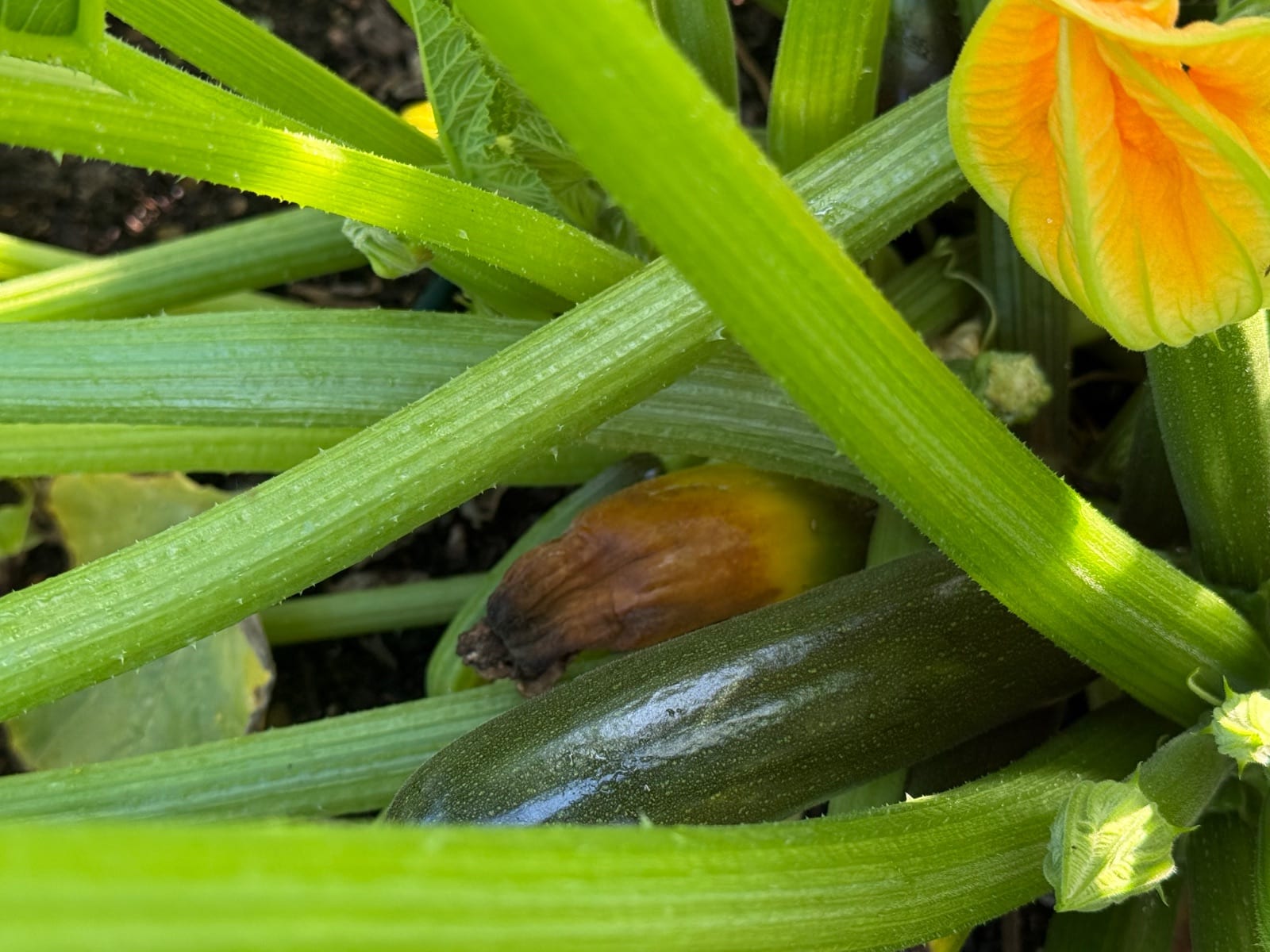
From the photo, I see a developing squash/pumpkin fruit partially browned with a dark, slightly fuzzy-looking patch near the blossom end, alongside nearby flowers/parts showing signs of browning and tissue collapse. Gray mold (Botrytis cinerea) commonly attacks stressed flowers and the blossom end on cucurbits, especially when humidity stays high, leaves stay wet, air circulation is poor, or flowers don’t dry quickly after opening. The key look here is the localized browning at the fruit/blossom end, which is a typical entry point for fungal decay. Other problems can mimic this (for example, bacterial fruit rot, blossom-end rot from uneven calcium/watering, or injury from pests), but the combination of flower/attachment-zone browning and dark decayed tissue is consistent with Botrytis gray mold. Because we only have one image and can’t see texture closely or a full plant view, the confidence is moderate rather than high.
Solution
1. Improve the microclimate and remove affected tissue: Gray mold spreads when flowers/fruit stay wet and plant parts remain crowded. Gently remove the dead/browned blossoms and any obviously rotting fruitlets (cut with clean shears and discard, don’t compost). Thin dense foliage if it’s causing poor airflow. Water at the soil line (not over the leaves/flowers), preferably in the morning so the surface dries quickly. Space plants as feasible and avoid working the plants when they’re wet. This reduces fungal spore spread and stops the rot at the entry point. 2. Apply an appropriate fungicide strategy (repeat as labeled): If the weather has been humid or the rot keeps recurring, use a fungicide labeled for cucurbits/gray mold. In many regions, options include products with active ingredients such as chlorothalonil or mancozeb (contact protectants) and/or botrytis-active products like cyprodinil/ fludioxonil (where permitted). Apply before new infections and repeat at the interval on the label; thorough coverage around flowers and the blossom end is critical. Because active ingredients vary by country and garden regulations, choose a product that is registered for squash/cucumbers and gray mold/flower blight in your area, and follow the label exactly for rate, timing, and safety. 3. Correct underlying stress factors (watering/fertilizer/pollination): Botrytis often follows stress and poor fruit set. Keep watering consistent—cucurbits dislike cycles of drought and saturation. Use mulch to reduce soil splash and keep the blossom end drier. Avoid excessive nitrogen (it produces lush, dense growth that stays wet and is more susceptible). Ensure adequate pollination (especially for early flowers); if pollination is poor, fruit can stay undeveloped and decay more easily at the blossom end. If you suspect calcium-related blossom-end breakdown, use a balanced fertilizer and consider soil testing; however, the pictured blossom-end decay still warrants fungal management first when gray mold symptoms are present.
Notice
The function of Plantypia is using AI, so it may be inaccurate. Please use it for fun and reference only.
Check with official pest context
Leaf spots and wilting can come from watering, temperature, or season changes as well as pests.