Diagnosis Result
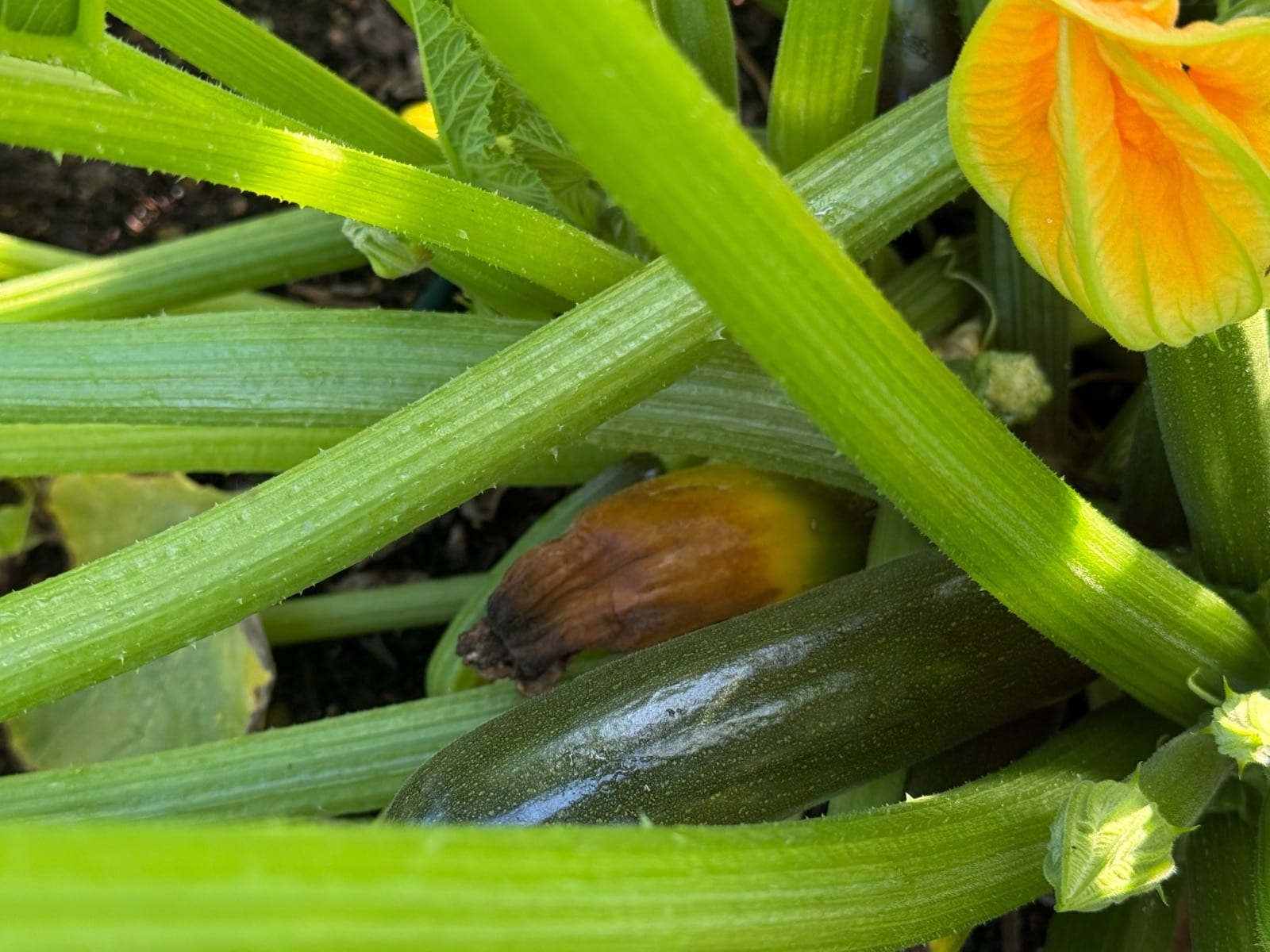
Description
From the photo, several plant stems/leaves show a small, brown-to-gray, slightly sunken, patchy lesion area that is consistent with fungal infection. The plant appears to be a flowering ornamental (the large orange/yellow flower suggests a begonia/canna-like type), and there is evidence of necrotic tissue close to where moisture would collect (between stems/leaf bases and near flowers). Gray mold (Botrytis) commonly produces brown lesions that may turn gray and fuzzy in high humidity; alternatively, other leaf/stem blights (often caused by Botrytis, Alternaria, or similar pathogens) can show localized dark spots and tissue collapse. Because the image shows mainly necrotic/browned spots without clearly visible gray “fuzz” and without a full view of the entire plant, this is a best-fit diagnosis rather than a definitive lab ID. The most important clue is the presence of a fungal-looking lesion on succulent, thick plant tissue in a garden/greenhouse context where humidity or wetting of foliage is likely.
Solution
1. Improve airflow and reduce leaf wetness immediately: Water early in the day and avoid wetting flowers and foliage; use drip irrigation or a soaker hose so water lands on the soil only. Remove any obviously dead or heavily spotted leaves/flower parts and discard them (do not compost). Space plants so air can circulate and keep weeds down. If this is in a greenhouse/high-humidity area, vent more and consider a gentle fan to keep humidity down around the foliage. 2. Sanitize and protect the affected tissue: Using clean pruners (wipe blades with 70% alcohol or a bleach solution, then rinse), trim back to healthy tissue where the lesion is clearly starting to spread. Fungal spores can remain on plant debris and tools; cleaning prevents re-inoculation. After pruning, avoid handling the wet plant further and allow the plant surface to dry quickly. If lesions are on stems near the soil line, consider whether mulch is staying too wet against the crown; keep mulch slightly back from the crown to prevent constant moisture contact. 3. Apply a labeled fungicide and repeat as directed: Since Botrytis/gray mold is a common cause of brown/gray stem and flower blight under humid conditions, use a fungicide that controls Botrytis for ornamentals and follow the label rate and schedule. Common active ingredients include chlorothalonil, mancozeb, or copper-based products for general fungal suppression (note: copper is preventative and can be phytotoxic under some conditions). For stronger Botrytis control, look for products labeled with botrytis-active ingredients such as iprodione (where legal), thiophanate-methyl, or other group-appropriate fungicides (always check local regulations and the product label). Rotate modes of action if you repeat treatments to reduce resistance. Treat both the stems and the surrounding foliage, and re-apply after rain or heavy watering only as the label allows. 4. Adjust watering/feeding to support recovery: Keep soil consistently moist but not waterlogged; allow the top 1–2 cm (or the upper inch in pots) to dry slightly between waterings. Overly wet media increases fungal pressure. If the plant is actively growing, use a balanced fertilizer at normal label rates, but avoid excessive nitrogen (lush growth stays wet longer and is more disease-susceptible). If plants are in pots, ensure drainage holes are clear and that runoff is not pooling around the crown.
Notice
The function of Plantypia is using AI, so it may be inaccurate. Please use it for fun and reference only.
Check with official pest context
Leaf spots and wilting can come from watering, temperature, or season changes as well as pests.