Diagnosis Result
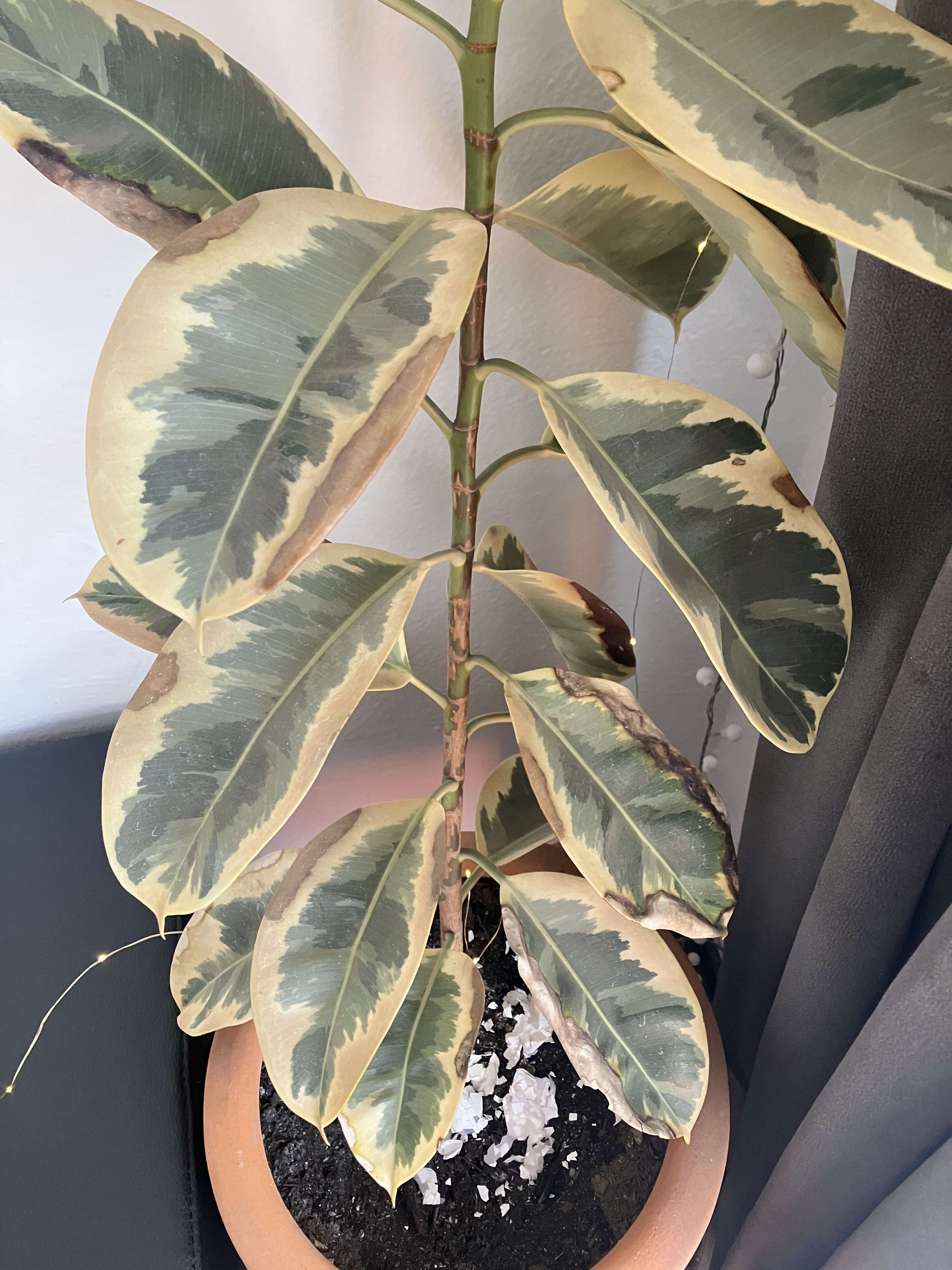
Description
The plant in the photo appears to be a variegated rubber plant (Ficus elastica ‘Variegata’). The brown, dried tips and edges along multiple leaves are characteristic of abiotic leaf scorch rather than a clear fungal or bacterial disease. Variegated cultivars have reduced chlorophyll in their creamy margins, which makes them more susceptible to environmental stress. Common non-disease causes include low indoor humidity, dry air from heating or air conditioning, inconsistent watering (both overwatering and underwatering), sunlight burn from direct exposure, and mineral/salt buildup from hard tap water or excessive fertilizer. The symptoms shown—brown, crispy margins starting at the leaf tips and along some margins—fit a scorch scenario where transpiration exceeds the leaf’s water supply or salts irritate the tissue. There is no overt sign of leaf spots with distinct margins or lesions that would suggest a contagious pathogen; rather, the pattern and location of browning point toward abiotic stress and local environmental factors. Correct diagnosis is important because management focuses on altering care practices rather than applying fungicides or bactericides. Improving humidity, watering consistency, light exposure, and salt management typically reverses or limits progression, and healthy new growth indicates recovery.)
Solution
1. Correct environmental stress and stabilize watering and humidity: Begin by optimizing the plant’s care environment, which is the most common driver of leaf scorch in variegated rubber plants. Move the plant away from dry heat sources, cold drafts, and direct harsh sun (particularly window glass that can magnify heat). Provide bright, indirect light for several hours daily to support variegated leaf function without causing sunburn. Reassess watering: allow the top 2 inches of the potting mix to dry out before watering again, and then water thoroughly until the excess drains freely. Empty the saucer to prevent root rot. Use filtered, distilled, or rainwater if possible to reduce mineral buildup. Increase ambient humidity toward a comfortable indoor range (roughly 40–60%). You can achieve this with a humidifier, a pebble tray, or by grouping plants together, but ensure the pot is not standing in water. Regularly wipe the leaves with a damp cloth to remove dust that can impede stomatal function and transpiration. After 2–3 weeks, monitor for new leaf development with healthier margins; if new growth shows a normal color and tip browning decreases, this confirms abiotic stress as the primary cause. If there are severely damaged tips, trim them with clean scissors to improve appearance and reduce ongoing stress, but avoid removing healthy tissue. This approach focuses on restoring the plant’s water balance, reducing evaporation from the leaf surfaces, and ensuring the root zone remains well-hydrated without being waterlogged, all essential to reversing scorch symptoms in variegated rubber plants.
Notice
The function of Plantypia is using AI, so it may be inaccurate. Please use it for fun and reference only.
Check with official pest context
Leaf spots and wilting can come from watering, temperature, or season changes as well as pests.