Diagnosis Result
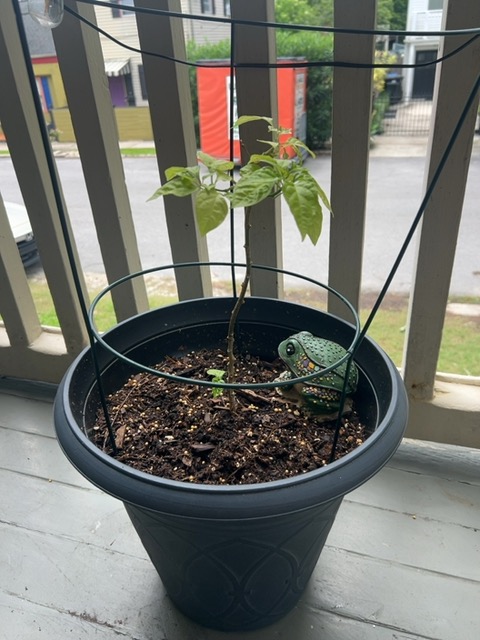
Description
From the photo, the plant (appears to be a small pepper/tomato-type seedling) is wilting with yellowing and drooping leaves. The pot sits on a hard surface and the soil looks dark and very wet/compact rather than airy. There’s no clear pattern of powdery growth or insect damage visible, and the stem/crown region appears stressed. When wilting occurs alongside consistently wet, heavy soil, a common cause is crown/near-stem rot (often bacterial or fungal) that damages roots and blocks water uptake. Even if it’s not fully “fungal,” the underlying issue is usually overwatering and insufficient oxygen at the roots, which can quickly lead to rotting at the crown. Another contributor could be transplant shock, but the soil condition plus progressive wilting makes rot/overwatering more likely than a simple shock alone.
Solution
1. Check moisture and improve drainage immediately: Lift the pot and test the soil 2–3 inches down. If it feels wet or cool, stop watering and allow it to dry. If you suspect drainage is poor, move the plant to a pot with drainage holes and use a light, fast-draining mix (potting mix amended with perlite). Ensure the saucer doesn’t hold runoff water; empty any standing water. Roots that stay oxygen-starved for days can rot even if the plant is otherwise healthy. 2. Inspect the crown/roots and remove any rot: Carefully remove the plant from the pot. Look at the roots and the crown area just at the soil line. Healthy roots are usually light tan/white; rotting roots look brown/black, mushy, or smell sour. Using sterilized scissors, trim away any soft or blackened tissue. Discard heavily affected soil (do not reuse). Rinse briefly with clean water if you need to, then repot into fresh, dry, airy mix. If most of the root system is gone, take a small healthy cutting if possible (for certain plants) or treat this as a restart. 3. Reduce spread and treat as needed: After trimming, let the plant sit dry for 30–60 minutes to air-dry cut surfaces, then repot. If you have access to a broad-spectrum biological or fungicidal drench labeled for root/crown rot or damping-off, apply according to the label (for example, products containing Bacillus species or a copper-based bactericide where appropriate). Avoid heavy foliar spraying if the soil is still wet. Then water only when the top 1 inch (or 2–3 cm) is dry, watering thoroughly until excess drains out, and keep the plant in bright, indirect light (or gentle sun) with good airflow to help it recover.
Notice
The function of Plantypia is using AI, so it may be inaccurate. Please use it for fun and reference only.
Check with official pest context
Leaf spots and wilting can come from watering, temperature, or season changes as well as pests.