Diagnosis Result
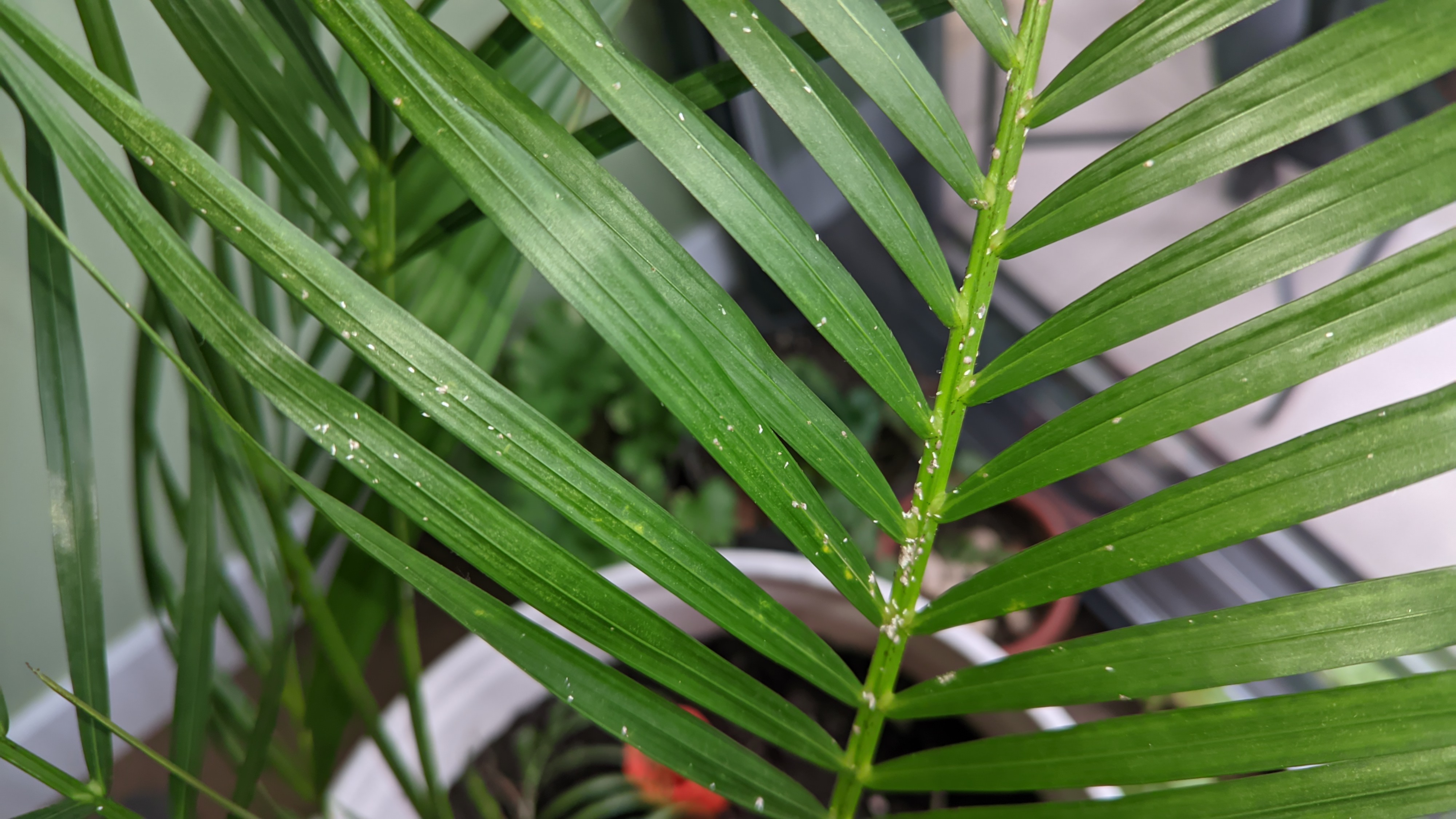
Description
The image shows numerous tiny white specks clustered along the leaflets and along the stem of a palm. This is highly characteristic of armored scale insects (Diaspididae). Armored scales are small, sap-sucking insects that attach themselves to plant surfaces and form a protective covering over their bodies. They feed on plant sap, which weakens the plant, may cause yellowing, stunted growth, leaf drop, and a general decline in vigor. Heavy infestations can lead to dieback. You may also notice a sticky residue (honeydew) and the growth of sooty mold on leaves if honeydew accumulates, which further reduces photosynthesis. Because the pests are sessile, they can be hard to remove once established. Monitoring and early intervention are key; avoid overwatering or over-fertilizing, which can worsen pest pressure by promoting lush new growth that scales love to feed on. The pictured specks are best treated with targeted mechanical removal combined with appropriate insecticidal control to prevent reinfestation from crawlers that hatch after initial treatment.
Solution
1. Manual removal and targeted insecticidal treatment. Start by isolating the plant to prevent spread to others. Put on gloves and gently wipe each visible scale with a cotton swab dipped in 70% isopropyl alcohol, which dissolves the scale’s protective covering and kills the insect. For dense areas or larger infestations, use a soft brush dipped in alcohol to dislodge scales without damaging the plant tissue. After mechanical removal, inspect the undersides of fronds and along the stems for remaining scales. Repeat the alcohol wipe every 5–7 days for 2–3 weeks to target crawlers that hatch after the first pass. Once you’ve reduced the population, apply a systemic insecticide labeled for indoor ornamentals (for example, a product containing imidacloprid or dinotefuran) to the potting mix or as a soil drench, following the product label’s exact instructions. The systemic will be taken up by the plant and kill feeding scales, including those that are not easily accessible. Do not exceed label directions, especially for homes with pets and children. Apply during the plant’s active growth period and avoid applying in direct bright sunlight to prevent leaf burn. Re-apply according to the label if new crawlers appear or new growth develops with tiny scale nymphs. Continue monitoring for 4–8 weeks after treatment, as armored scales can re-emerge from hidden eggs. For ongoing protection, consider a follow-up soil drench in 6–12 weeks if pest pressure persists, and rotate products to avoid resistance. Maintain clean cultural practices to reduce reinfestation, including removing fallen leaves and keeping the plant away from other infested specimens. A proper combination of cleaning and carefully timed systemic control offers a practical, effective approach to remove armored scales while preserving plant health.
Notice
The function of Plantypia is using AI, so it may be inaccurate. Please use it for fun and reference only.
Check with official pest context
Leaf spots and wilting can come from watering, temperature, or season changes as well as pests.