Diagnosis Result
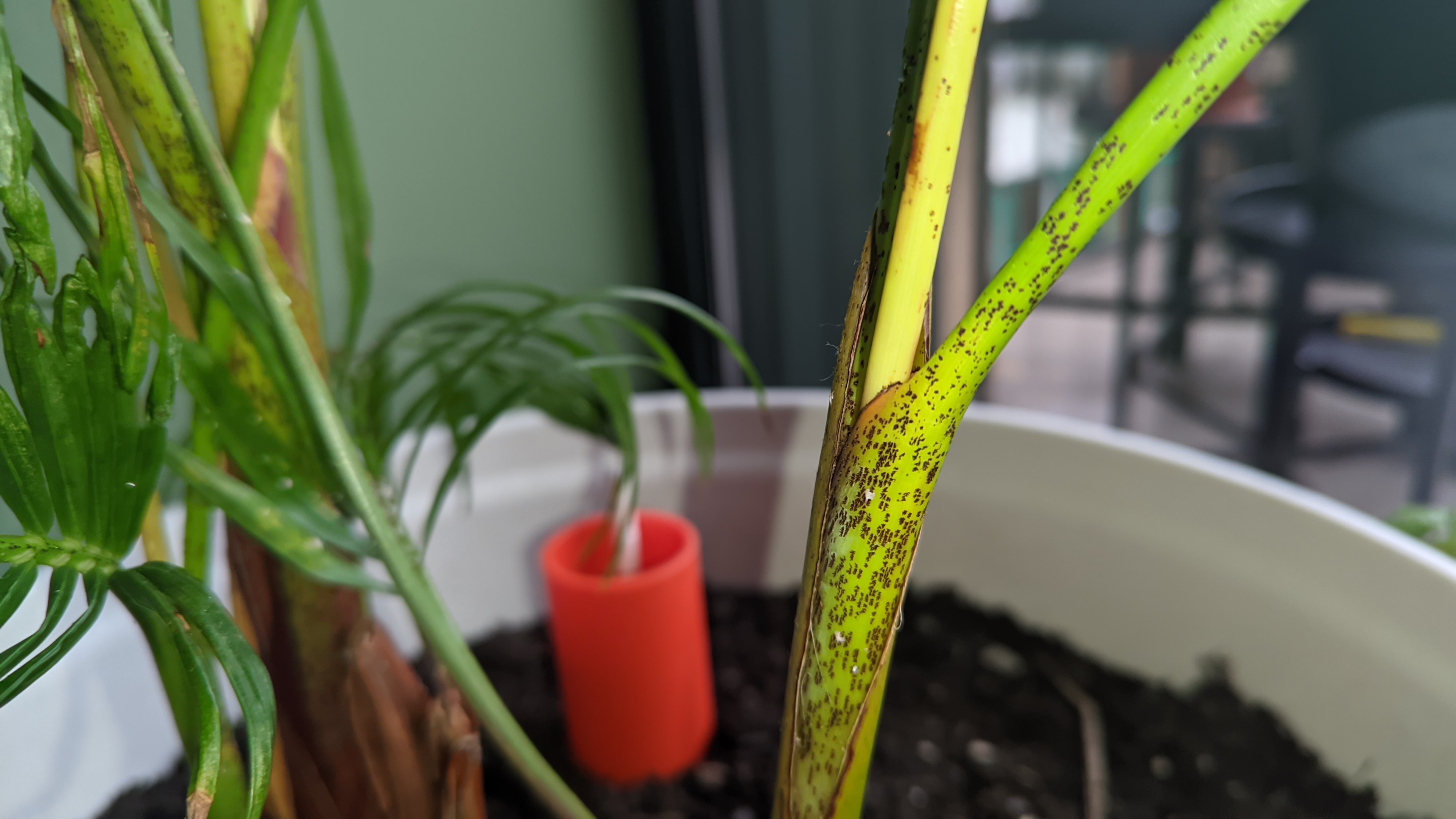
Description
The image shows a potted plant with a green-yellow cane/stem covered in numerous small, dark brown to almost black specks. This pattern is characteristic of scale insects that attach themselves to stems and leaves. Scale insects are sap-sucking pests that form protective coverings, making them look like tiny, immobile bumps. They excrete honeydew, which can lead to sooty mold and further decline in plant vigor, yellowing leaves, stunted growth, and eventual dieback if untreated. Inside environments often foster scale due to warm temperatures and limited natural predators. Regular inspection of stems, nodes, and leaf axils is essential to catch early infestations, as crawlers are mobile for a short window after hatching.
Solution
1. Immediate mechanical/alkaline cleanup approach to quickly reduce pest load and inhibit spread\n\nIsolate the plant from others to prevent cross-contamination. Put on gloves and use a cotton swab or soft toothbrush dipped in 70% isopropyl alcohol and gently rub each visible scale. The alcohol dissolves the protective coating and kills the insect. For stubborn clusters, alternate with gentle, circular brushing while holding the stem to avoid tearing the tissue. After dislodging the scales, wash the stem with a mild dish soap solution (a few drops per liter of water) to remove residual honeydew and dead shells, then rinse with clean water. Dry the plant briefly and inspect again; repeat the alcohol swab treatment on any remainders. This manual method is vital to reduce immediate pest pressure and lowers the risk of chemical resistance later. Following the manual phase, apply a low-toxicity oil or soap spray to suffocate remaining crawlers on a new growth cycle; reapply after 7–10 days if you still see crawlers or new scale shells. Monitor weekly for new crawlers, especially during warmer weeks, and repeat until no new scales appear for two consecutive checks. Always test any spray on a small area first to ensure your plant tolerates it, especially on tender new growth. Note that scale can reappear from infested pots or neighboring plants, so cleaning the pot area and nearby foliage is essential. This approach prioritizes safety for indoor use, reduces chemical exposure, and lays the groundwork for longer-term control without overwhelming the plant’s system.\n\n2. Integrated chemical/biocontrol with targeted products (systemic and contact treatments)\n\nIf the infestation persists after mechanical cleaning, consider a targeted chemical approach following label directions and safety precautions. A systemic insecticide containing imidacloprid or dinotefuran can be effective when applied as a soil drench, allowing the plant to absorb the toxin and kill feeding scale insects from within. Start with a half-label rate for a small plant, then observe for 2–3 weeks; avoid overwatering immediately after application and ensure the soil stays moist enough for uptake. For large-canes or stubborn patches, repeat a light soil drench after 2–4 weeks if crawlers reappear. In parallel, use a well-formulated horticultural oil (but not during high heat) or insecticidal soap on the stems and aphid-prone zones to smother any remaining scales and newly hatched nymphs. Apply during cooler parts of the day to minimize plant stress and sun scald, and avoid application when the plant is under drought stress. Metal or plastic containers should be cleaned between uses to prevent reinfestation. Keep pets and children away during and after treatment as directed by the product label. Systemic approaches work well for indoor settings because they target feeding insects even behind the protective shells, but they require careful timing and adherence to label instructions to minimize risk to beneficial organisms and the plant itself.\n\n3. Long-term prevention and cultural controls (sustainability and resilience)\n\nAfter the infestation is under control, shift focus to prevention to prevent recurrence. Inspect new plant material before introducing it to your collection; quarantine new specimens for at least 2–4 weeks and inspect for any signs of scale or honeydew. Maintain good air circulation around the plant and avoid overwatering, since scale thrives in humidity and stagnant air. Clean the pot and saucer with soap and water, then sterilize with a mild bleach solution to destroy lingering eggs. If your plant is heavily infested again, consider pruning away the most affected canes to reduce the pest reservoir, and discard extremely damaged sections. Use a clean, sterile pruning tool after each cut. Regularly wipe down leaves and stems with a damp cloth to remove dust that can harbor pests. Finally, schedule routine proactive checks—at least monthly—especially during warmer months when scale crawlers are most active. A well-maintained plant with immediate detection and rapid response is much less likely to experience severe damage, and combining mechanical removal with selective, label-compliant chemical interventions reduces the chance of resistance and keeps indoor greenery healthy over the long term.
Notice
The function of Plantypia is using AI, so it may be inaccurate. Please use it for fun and reference only.
Check with official pest context
Leaf spots and wilting can come from watering, temperature, or season changes as well as pests.