Diagnosis Result
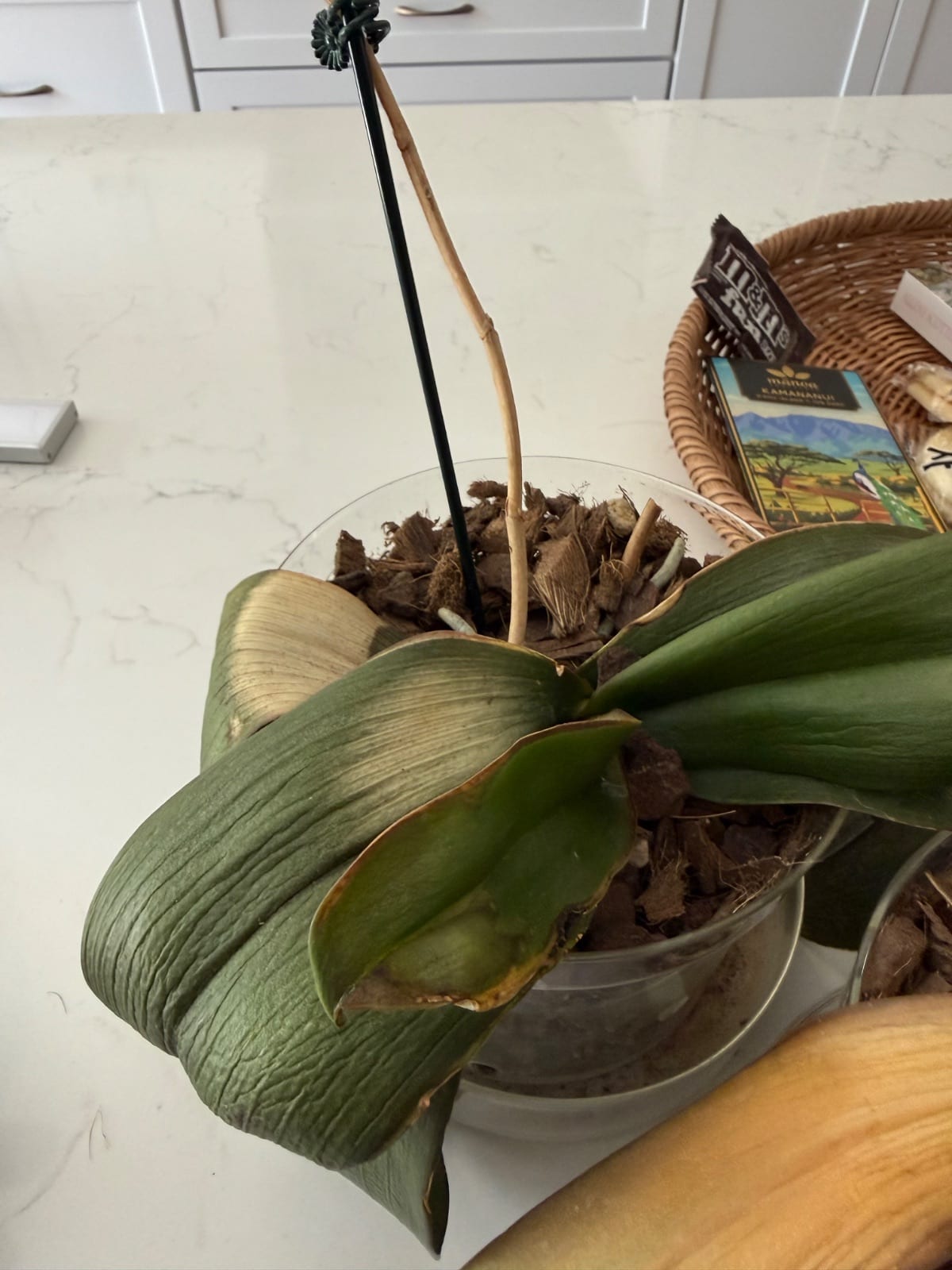
Description
From the photo, the Phalaenopsis (moth orchid) appears to be suffering from rot concentrated around the base/crown area and the roots. The roots and the growing area look dark/brown and dry/decayed rather than firm and whitish/green. The two upright canes/pods look dead or dried, which is consistent with a plant that has lost effective roots and can no longer take up water. Crown/neck rot in orchids is commonly caused by water being trapped in the crown (between leaves) and/or consistently wet, oxygen-poor medium leading to fungal/bacterial tissue breakdown. Because the crown is central to growth, once rot progresses the plant may stop producing new leaves/roots and can quickly deteriorate. While I can’t confirm from a single image whether the rot is bacterial vs fungal vs purely mechanical damage, the pattern strongly fits root/crown rot related to excess moisture or insufficient drainage.
Solution
1. Remove from the pot and inspect immediately: Take the orchid out of the container and gently wash/brush off all old bark/medium. Using sterile scissors, cut away any roots that are hollow, black/dark brown, mushy, or foul-smelling; healthy roots should be firm (green/gray depending on hydration). If there is any blackened, soft, or mushy tissue in the crown/neck area, carefully trim back only to clean, firm tissue. Disinfect tools (alcohol or flame) between cuts to prevent spreading. 2. Treat the rot and dry the crown: After trimming, let the roots/crown air-dry in a dry, shaded, well-ventilated area for 1–3 hours (longer if the tissue is still very wet). Then apply an antifungal bactericide approach. If you have it, use a commercial orchid/fungicide product labeled for rot (follow label rates). Otherwise, a common home approach is to apply a cinnamon dusting to freshly cut tissue (cinnamon acts as a mild antifungal/anti-microbial). Avoid soaking the crown again. If you suspect active crown rot, you may also repeat a targeted treatment once after 3–5 days, but do not keep the crown constantly wet. 3. Repot correctly and switch watering habits: Repot into a fresh, airy mix—typically fine fir bark or sphagnum/perlite blend depending on your environment, ensuring excellent drainage and lots of air around the roots. Use an orchid pot with side holes (or a breathable basket) so water can drain fast and roots can oxygenate. After repotting, wait to water for several days (often 3–5) if significant rot was present and cuts were made; then water thoroughly by soaking the medium for a short time (5–15 minutes) and drain completely. Water only when roots are silvery and the medium is nearly dry; never let water sit in the crown. 4. Provide recovery conditions: Keep the plant bright with indirect light (near an east window or under grow lights), warm (roughly 68–80°F / 20–27°C), and with gentle airflow. Avoid cold drafts and avoid high humidity that stays wet on leaf bases. If possible, increase ventilation rather than frequent misting. During recovery, don’t fertilize until you see new roots or clear regrowth; if you do fertilize later, use 1/4 strength and after the plant is actively growing. Monitor weekly: new firm roots and green tips indicate recovery; continued blackening/softening means rot is still progressing and the trimmed areas may need retreatment.
Notice
The function of Plantypia is using AI, so it may be inaccurate. Please use it for fun and reference only.
Check with official pest context
Leaf spots and wilting can come from watering, temperature, or season changes as well as pests.