Diagnosis Result
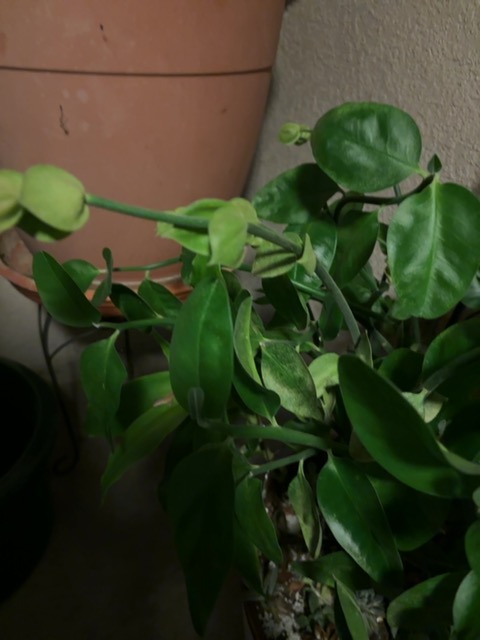
Description
From the photo, the plant appears to be a wax plant (Hoya) or a similar thick-leaved indoor vine. The leaves look generally glossy and healthy, with only minor signs of stress such as slight yellowing on a few lower leaves and some drooping. There are no obvious symptoms of common pathogens like powdery mildew, leaf spot, mold, or webbing. In indoor settings, similar symptoms are most often caused by abiotic stress: inconsistent watering (overwatering or underwatering), low or fluctuating humidity, inadequate light, or a container with poor drainage leading to root stress. Pests can mimic these symptoms but are not clearly visible in the image. A careful check of soil moisture, drainage, light exposure, and a quick pest inspection would help confirm the issue.
Solution
1. Immediate environmental adjustment and watering routine: Start by confirming the plant species (appears to be a wax plant). The most common causes of mild yellowing and droop in such plants are overwatering, poor drainage, and insufficient light. Begin with a soil moisture check: insert a finger about 2-3 cm into the soil. If it feels moist, hold off on watering and allow the top layer to dry; if dry, water thoroughly until water drains freely from the pot, then discard any excess from the saucer. Use room-temperature water and consider a well-draining mix (2 parts peat-based potting mix with 1 part perlite or orchid bark). Ensure the pot has drainage holes and is not too large for the root ball. After watering, let the soil surface dry before the next irrigation, which may be every 7-10 days in spring/summer and a bit less in winter, but adjust to the plant’s environment. Move the plant to bright, indirect light to promote photosynthesis and steady growth, and rotate weekly for even development. Maintain moderate humidity (40-60%) and stable temperatures (roughly 65-80°F / 18-27°C). Avoid cold drafts. If the plant was recently repotted or if the soil still feels heavy, consider gently lifting the plant, trimming any mushy roots, and replanting in fresh, well-draining mix. After a few weeks, monitor new growth; if new leaves emerge healthy, you’ve addressed the stress source. Do not fertilize during this stressed period; resume with a diluted balanced fertilizer at half-strength every 4-6 weeks once growth resumes. This approach targets the most likely root causes of the observed symptoms and helps restore vigor. 2. Pest check and targeted control plan: While not obvious in the image, indoor wax plants can harbor pests such as scale, mealybugs, or spider mites, which can cause yellowing, stippling, or leaf drop if present. Perform a careful inspection of the undersides of leaves and along new growth with a magnifying glass; look for tiny brown or green shell-like scales, white cottony masses, or fine webbing. If pests are found, start with mechanical removal: dab each pest with a cotton swab dipped in 70% isopropyl alcohol to dissolve protective coverings and kill them on contact; wipe off residue. For broader infestations, spray with horticultural oil or insecticidal soap, ensuring thorough coverage on both upper and lower leaf surfaces and stems. Reapply as directed, usually after about 7-10 days, to target newly hatched stages. Avoid applying oil-based products during hot periods or when temperatures exceed 85°F (29°C) to prevent leaf burn. If infestation persists, a systemic insecticide containing imidacloprid may be considered, strictly following label instructions and safety precautions, and keeping the plant away from children and pets during treatment. After treatment, isolate the plant for a week and clean leaves to remove honeydew and mold growth. Regular inspections should be scheduled to prevent reinfestation. Maintain good air circulation and avoid overwatering, as these factors can encourage pest outbreaks. If pests are absent, continue the environmental plan in solution 1 and monitor monthly for signs of new pests. 3. Long-term prevention, care optimization, and propagation options: Once the plant stabilizes, shift focus to sustainable care that reduces future stress. Maintain a consistent watering and feeding routine: fertilize with a balanced liquid fertilizer every 4-6 weeks during active growth (spring and summer) at half strength; skip fertilization in winter. Provide bright, indirect light for 12-14 hours daily if natural light is insufficient, and rotate regularly to promote even growth. Keep the temperature steady and avoid sudden drops or drafts; maintain moderate humidity to discourage stress. Clean leaves gently to remove dust, which improves photosynthesis and reduces pest habitat. If the plant became leggy, prune back older growth to encourage bushier development; cuttings can be rooted in fresh potting mix with a little rooting hormone if desired, creating backups in case portions of the plant become stressed. When repotting, choose a pot size that matches the root ball and refresh the soil to maintain aeration. Regularly inspect for signs of disease or pests, and address issues promptly. Document care routines to identify patterns that correlate with plant health, enabling proactive adjustments. With consistent light, water, and pest monitoring, the plant should maintain vigor and reduce the risk of recurring stress or disease.
Notice
The function of Plantypia is using AI, so it may be inaccurate. Please use it for fun and reference only.
Check with official pest context
Leaf spots and wilting can come from watering, temperature, or season changes as well as pests.