Diagnosis Result
Description
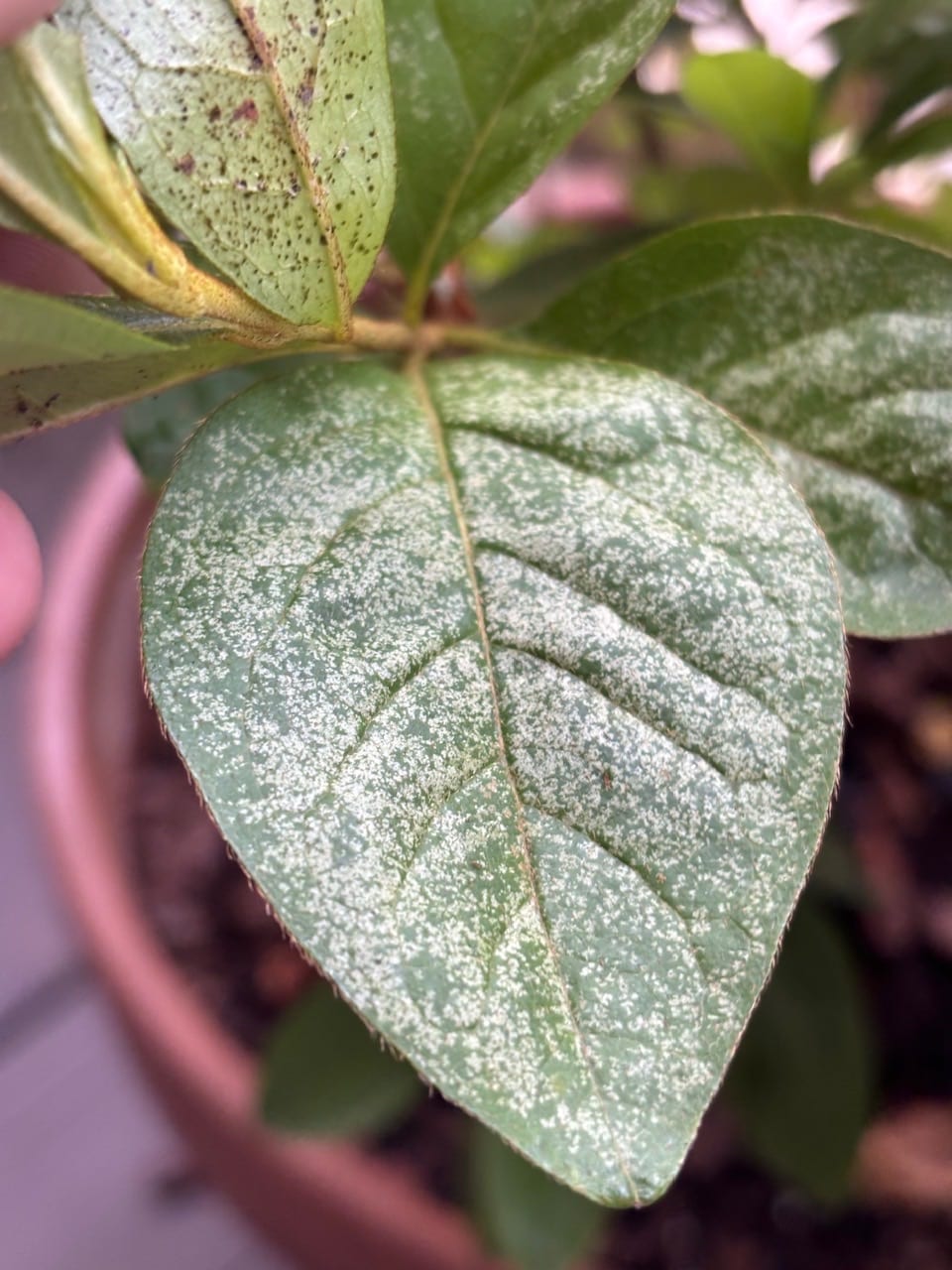
The leaf shows a classic light gray to white, powdery coating spread across the surface, giving a dusty or speckled appearance. There are also small dark specks and some browning around certain areas, which can occur when powdery mildew spots age or when leaf tissue becomes stressed. Powdery mildew is usually caused by fungal pathogens that thrive when humidity is high but leaf surfaces don’t remain wet for long; it commonly appears as a surface powder on the upper (and sometimes lower) leaves. Other diseases like downy mildew typically look more like yellowing with fuzzy growth on the underside, and many rust diseases form distinct pustules. The “powdery dust” look here most strongly points to powdery mildew, though leaf spotting and minor burn can be secondary effects.
Solution
1. Improve airflow and reduce mildew-favoring conditions: Move the plant to brighter light and ensure good air circulation around it (space plants apart if clustered). Water at the soil line rather than wetting leaves, and avoid watering late in the day. If indoor, run a small fan for gentle movement. Powdery mildew often worsens with stagnant air and frequent dampness; the goal is to make the canopy less humid and to reduce leaf surface conditions that allow the fungus to spread. 2. Remove and treat infected foliage immediately: Prune off the most heavily affected leaves and discard them (do not compost). Wipe or sanitize pruning tools between cuts. After removal, apply a mildew control spray. For home use, you can use horticultural neem oil (follow label rates) or a potassium bicarbonate product; these can help slow spread. If the infestation is strong, use a labeled fungicide effective against powdery mildew (products containing myclobutanil, tebuconazole, or sulfur—again, follow the label and avoid sulfur in very hot weather or on sensitive plants). Spray thoroughly so the powdery coating is covered, and repeat as directed (often every 7–14 days depending on product). 3. Use an organic/chemical spray program and monitor weekly: Start with one treatment strategy (e.g., neem or potassium bicarbonate) and repeat according to label or until the white powder stops expanding. In parallel, keep the plant on a balanced fertilizer schedule—avoid excess nitrogen, which can produce lush growth that mildew prefers. Check new growth and the undersides of leaves weekly; early treatment is key. Continue removing new diseased leaves as soon as they appear. If you see rapid spread despite proper airflow and repeated sprays, escalate to a dedicated systemic powdery mildew fungicide and continue sanitation and environmental improvements for the rest of the season.
Notice
The function of Plantypia is using AI, so it may be inaccurate. Please use it for fun and reference only.
Check with official pest context
Leaf spots and wilting can come from watering, temperature, or season changes as well as pests.